

Modern GPS ankle monitors have evolved significantly from early-generation tracking devices. Today, these tools combine advanced connectivity, biometric verification, and robust hardware to support effective community supervision. JSG Monitoring provides these solutions to courts, law enforcement, and monitoring companies across the United States. Understanding the core technical features helps agencies select the right equipment for their specific operational needs.
1. Multi-Technology Connectivity
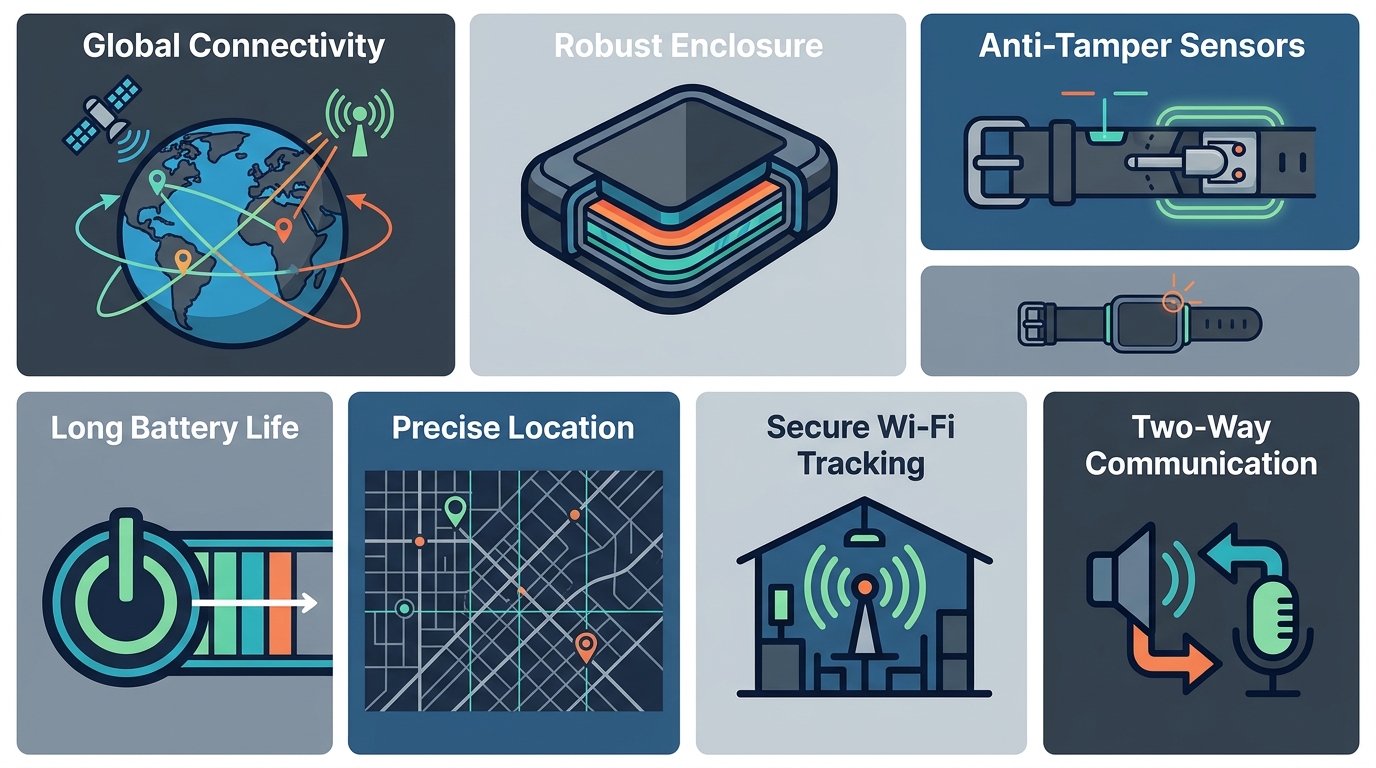
Reliable tracking requires more than just satellite signals. Modern devices utilize a combination of GPS, Wi-Fi, and cellular technology to ensure complete community coverage. This multi-technology approach allows for accurate location tracking even in areas with poor satellite reception or GPS interference. For example, the BI LOC8 XT uses this hybrid method to maintain precise positioning in both urban and rural environments.
2. Tamper-Proof Design
Security is paramount to prevent device removal or manipulation. A robust tamper detection system is essential for maintaining the integrity of the monitoring program. Devices like the SCRAM GPS feature revolutionary tamper-proof straps that significantly reduce false alerts while ensuring quick detection of actual tampering attempts. This reliability minimizes administrative burdens on monitoring officers.
3. Biometric Identity Verification
Confirming the wearer's identity prevents proxy testing and fraud. Biometric facial comparison is a critical feature that confirms the client's identity during check-ins or testing. The BI VeriWatch uses biometric facial comparison and liveness detection to ensure the person wearing the device is the authorized individual. This technology streamlines the verification process and enhances the security of the monitoring data.
4. Long Battery Life and Rapid Charging
Extended battery life reduces the frequency of required check-ins. Industry-leading battery life supports extended usage and minimizes disruptions for both clients and monitoring officers. Devices such as the Omnilink GPS OM500 feature rapid-charging, long-life batteries with rotating magnetic chargers. This design improves ease of use and compliance, ensuring the device remains operational for longer periods between visits.
5. Two-Way Communication Capabilities
Direct communication enhances accountability and reduces the need for in-person visits. Two-way communication allows officers to send messages and receive acknowledgments directly from the device. The OM500 uses vibrations, sound, and audio alerts to signal offenders, who can acknowledge notifications directly. This feature supports real-time interaction and helps maintain a connection between the supervising agency and the monitored individual.
6. Indoor and GPS-Impaired Tracking
Precise location verification is necessary in dense urban areas and indoors. Compatibility with RF and Wi-Fi beacons enables precise tracking in environments where GPS signals are weak or blocked. The Omnilink GPS OM500 integrates with optional beacons to provide accurate location data in homes or dense urban areas. This capability ensures that compliance with curfews and exclusion zones is monitored effectively regardless of the physical environment.
7. Seamless Software Integration
Efficient data visualization and reporting streamline officer workflows. Seamless integration with cloud-based software platforms allows authorities to visualize and monitor offender movements in real time. The OM500 integrates with FocalPoint software, providing accurate location data and actionable insights. This connectivity ensures that monitoring data is easily accessible and can be used to make informed decisions about case management.
Choosing the Right Device
When selecting a GPS ankle monitor, agencies should prioritize devices that offer a balance of reliability, security, and ease of use. Consider the specific needs of your caseload, such as the need for indoor tracking or biometric verification. JSG Monitoring offers a range of products, including the BI LOC8 XT, Omnilink GPS, and SCRAM GPS, to meet diverse operational requirements. By evaluating these key features, agencies can choose a solution that enhances compliance and supports public safety.
Frequently Asked Questions
What is the difference between GPS and Wi-Fi tracking in ankle monitors?
GPS tracking uses satellite signals to determine location, while Wi-Fi tracking uses nearby Wi-Fi networks to pinpoint location. Modern devices often use both technologies to ensure accurate tracking in various environments, including indoors where GPS signals may be weak.
How do tamper-proof straps work?
Tamper-proof straps are designed with secure mechanisms that alert the monitoring center if the device is removed or cut. Some straps use fiber optic technology to detect cuts, while others use robust materials that are difficult to remove without triggering an alert.
Can ankle monitors be used for alcohol monitoring?
Yes, some ankle monitors, such as the SCRAM Continuous, are designed for both GPS tracking and transdermal alcohol monitoring. These dual-purpose devices provide continuous alcohol testing and location tracking, offering a comprehensive solution for high-risk offenders.
What is the role of biometric verification in ankle monitors?
Biometric verification, such as facial recognition, ensures that the person wearing the device is the authorized individual. This feature helps prevent fraud and enhances the security of the monitoring data by confirming the identity of the wearer during check-ins or testing.
How often do offenders need to check in with their ankle monitor?
The frequency of check-ins depends on the specific device and program requirements. Some devices require daily check-ins, while others may allow for less frequent visits due to their long battery life and remote communication capabilities. Agencies can customize check-in schedules based on the risk level of the offender.
Are ankle monitors comfortable to wear?
Modern ankle monitors are designed to be low-profile and comfortable for long-term wear. Devices like the BI LOC8 XT feature a form-fitting design that ensures comfort while maintaining robust functionality. The goal is to minimize the impact on the wearer's daily life while ensuring reliable monitoring.
Next Steps
To explore how JSG Monitoring can support your agency with the right electronic monitoring solutions, . We are ready to assist you in enhancing community safety and accountability.