
Michigan courts must verify strict regulatory standards when selecting an alcohol monitoring bracelet provider to ensure public safety and legal defensibility. JSG Monitoring helps agencies navigate these complex requirements by supplying technology that meets state and federal expectations. This guide outlines the critical compliance factors judges and probation officers must evaluate before contracting with a vendor.
1. Data Integrity and Chain of Custody
Providers must guarantee unalterable data logs that withstand legal scrutiny. Courts require that every data point, from initial calibration to final report, remains secure and immutable. A robust chain of custody ensures that evidence collected via the bracelet is admissible in court proceedings. JSG Monitoring utilizes secure web portals that protect data integrity throughout the monitoring period.
2. Identity Verification and Biometric Security
Biometric confirmation prevents proxy testing and ensures the correct individual is monitored. Identity verification is a critical compliance requirement that prevents offenders from having others take their place during testing. Advanced systems use facial recognition to confirm the wearer's identity in real-time. This feature is essential for maintaining the validity of the monitoring program and ensuring accountability.
3. Tamper Detection and Alert Protocols
Immediate alerts for tampering or removal are mandatory for effective supervision. The device must detect any attempt to remove or interfere with the bracelet and notify monitoring officers instantly. Reliable tamper detection reduces the risk of non-compliance going unnoticed. JSG Monitoring devices feature robust tamper detection capabilities that enhance security and accountability for agencies.
4. Data Retention and Privacy Standards
Providers must adhere to state and federal data privacy laws regarding offender information. Michigan courts must ensure that vendor data retention policies comply with legal requirements for storing sensitive personal information. This includes secure storage, limited access, and proper disposal of data after the monitoring period ends. Compliance with privacy standards protects both the agency and the individual.
5. Device Accuracy and Calibration
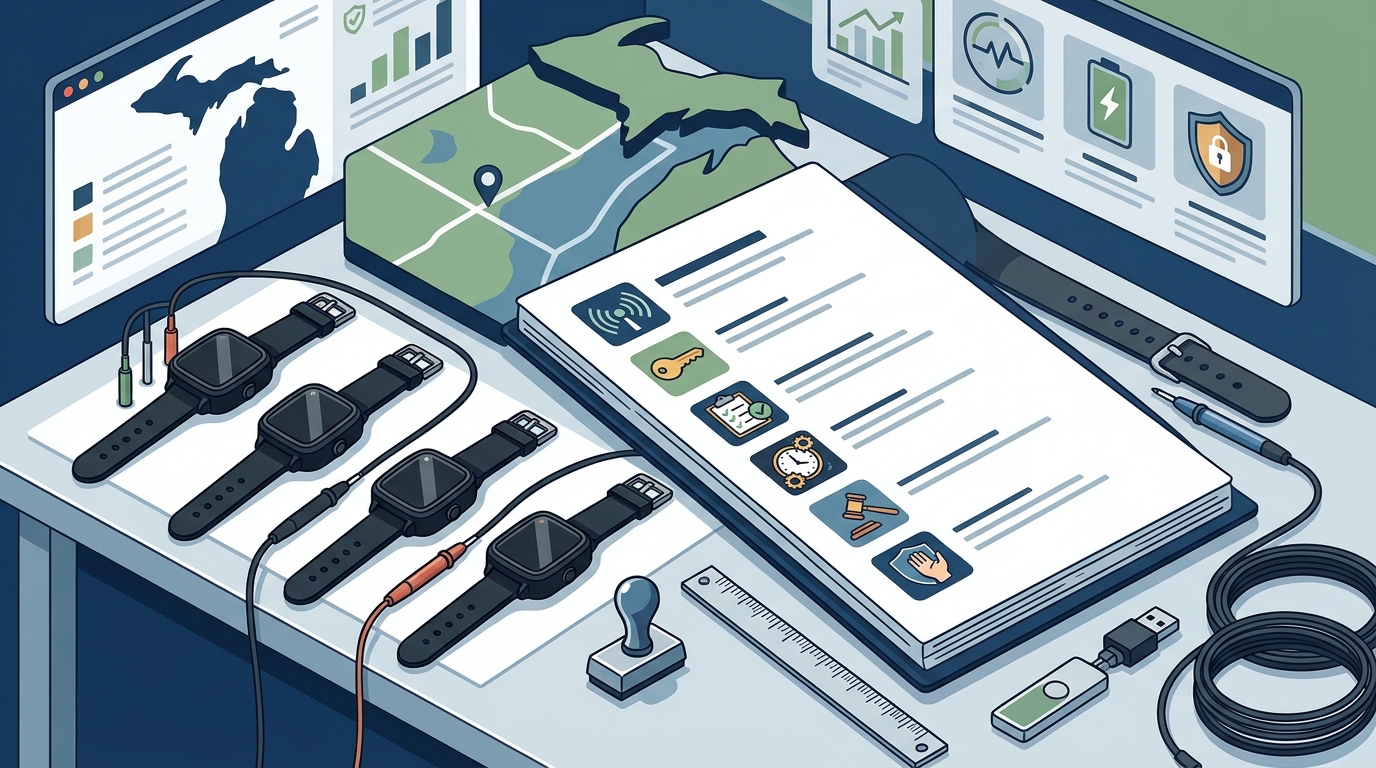
Regular calibration and proven accuracy are essential for reliable alcohol readings. Courts must verify that the provider uses devices with validated accuracy rates and regular calibration schedules. Inaccurate readings can lead to wrongful violations or missed offenses. JSG Monitoring offers devices with proven fuel cell technology and real-time BAC results to ensure accurate verification.
6. Software Integration and Reporting
Seamless integration with existing court management systems streamlines workflow and reporting. Providers must offer software that integrates with current case management platforms to reduce manual data entry. Automated reporting features help officers track compliance and generate court-ready documents efficiently. This integration is crucial for optimizing resources and improving operational efficiency.
7. Vendor Accountability and Support
24/7 technical support and clear service level agreements are non-negotiable for continuous monitoring. Courts need a vendor that provides round-the-clock support to address technical issues or device failures promptly. A reliable partner ensures that monitoring continues without interruption, maintaining public safety. JSG Monitoring partners with trusted suppliers to provide constant support and oversight through 24/7/365 monitoring centers.
Choosing the Right Provider
When selecting a provider, Michigan courts should prioritize vendors that demonstrate proven compliance with all seven requirements. Look for partners that offer transparent data practices, robust security features, and dedicated support. Contact JSG Monitoring to discuss how their solutions can meet your specific compliance needs.
Frequently Asked Questions
What is the primary legal requirement for alcohol monitoring data in Michigan?
The primary requirement is that data must be admissible in court, which necessitates a secure chain of custody and unalterable logs.
How does biometric verification enhance compliance?
Biometric verification, such as facial recognition, ensures that the individual being tested is the actual offender, preventing proxy testing.
Why is tamper detection critical for court compliance?
Tamper detection ensures that any attempt to remove or interfere with the device is immediately flagged, allowing for quick intervention.
What data privacy laws apply to alcohol monitoring in Michigan?
Providers must comply with state and federal privacy laws that govern the storage, access, and disposal of sensitive offender data.
How often should alcohol monitoring devices be calibrated?
Devices should be calibrated according to manufacturer recommendations and state regulations to ensure ongoing accuracy and reliability.
What role does software integration play in compliance?
Software integration ensures that monitoring data is seamlessly transferred to court systems, reducing errors and improving reporting efficiency.