

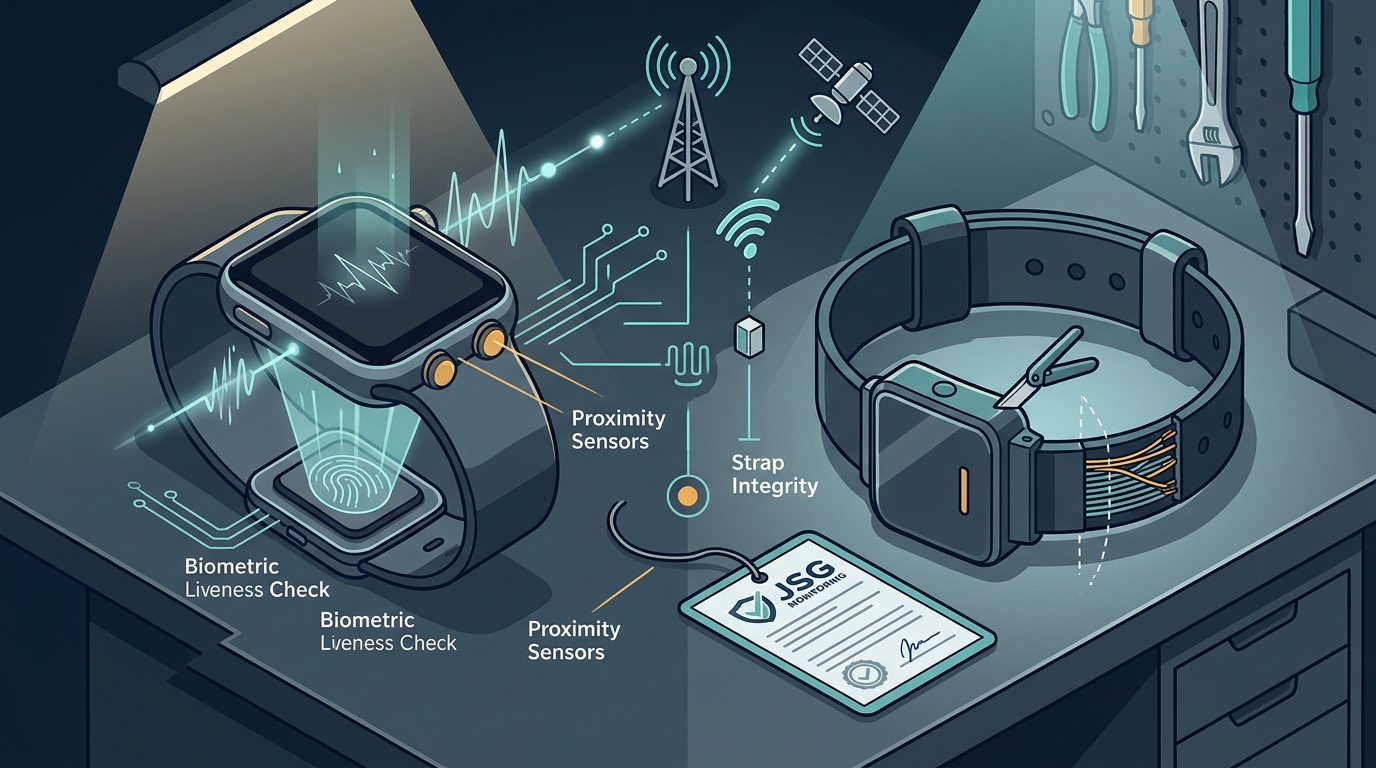
Wrist-worn devices detect tampering primarily through biometric liveness checks and proximity sensors, whereas ankle bracelets rely on physical strap integrity and cut-detection. This distinction matters because wrist devices can verify identity in real-time, while ankle devices focus on preventing physical removal. JSG Monitoring provides both form factors, allowing agencies to select the tool that best fits their specific supervision goals.
Biometric Verification in Wrist Devices
Wrist-worn monitoring is a technology that uses biometric sensors to confirm the identity of the wearer. Unlike traditional ankle monitors, which assume the person wearing the device is the assigned offender, wrist devices actively verify identity. The BI VeriWatch® device, for example, uses biometric facial comparison to confirm the client is present. This is a critical difference because it prevents a third party from wearing the device on behalf of the offender.
The device includes liveness detection to ensure the person is actually present and not using a photo or video. When the device is removed or moved, a proximity sensor aids in detecting device removal and prompts a biometric check-in. This creates a layered security model where physical removal triggers an identity verification event. For agencies, this means higher confidence that the data being collected belongs to the correct individual.
Physical Integrity in Ankle Bracelets
Ankle bracelet tamper detection is a system that monitors the physical state of the strap and housing. These devices are designed to be robust and difficult to cut. The OM500, for instance, features a cut-free, fiber optic strap that prevents false tamper alerts. This technology distinguishes between a genuine cut attempt and normal wear and tear. If the strap is compromised, the device sends an immediate alert to the monitoring center.
Traditional ankle monitors often rely on simple electrical circuits that break when the strap is cut. While effective, these can sometimes trigger false positives due to environmental factors. Modern devices like the BI LOC8® XT use robust tamper detection features to ensure immediate alerts in case of tampering attempts. The implication for agencies is that ankle devices provide a strong physical barrier, but they do not inherently verify who is wearing them.
Sensor Differences and Alert Logic
The core difference lies in the type of sensor used. Wrist devices often use high-frequency pursuit mode and proximity sensors. When the BI VeriWatch® detects that it is no longer on the wrist, it enters a high-frequency tracking mode. This allows the device to maintain a connection even if the wearer attempts to hide it. The alert logic is designed to be responsive to movement and position changes.
Ankle devices, conversely, focus on continuity. The SCRAM GPS® features a revolutionary tamper-proof strap that significantly reduces false alerts. This is crucial for reducing administrative burdens on monitoring officers. If an ankle device alerts too frequently for minor issues, officers may become desensitized. By using fiber optic or advanced circuitry, modern ankle devices ensure that alerts are meaningful and actionable. This improves the overall efficiency of the monitoring program.
Operational Implications for Agencies
Choosing between wrist and ankle devices depends on the risk profile of the offender. For high-risk individuals, the identity verification of a wrist device may be more valuable. For lower-risk individuals, the robust physical integrity of an ankle device may be sufficient. JSG Monitoring offers a range of products, including the SCRAM Continuous Alcohol Monitoring bracelet, which combines alcohol testing with optional home curfew monitoring. This dual-purpose capability adds another layer of compliance enforcement.
Agencies must consider the operational workflow. Wrist devices require regular charging and may need more frequent interaction for biometric checks. Ankle devices are often designed for longer battery life and less frequent maintenance. The Buddi Insight Smart Tag, for example, features on-body charging for convenience. This operational difference impacts how monitoring centers staff their shifts and manage caseloads. The right choice balances security needs with operational capacity.
Future Trends in Tamper Detection
The future of tamper detection is moving toward integrated biometrics and AI. Devices are becoming smarter about distinguishing between normal movement and tampering attempts. The BI SL3® Portable Alcohol Breathalyzer uses Adaptive Facial Recognition® to ensure accurate verification. This technology is increasingly being applied to location tracking devices as well. The implication is that tamper detection will become less about physical barriers and more about digital identity verification.
As technology advances, the line between wrist and ankle devices may blur. However, the fundamental difference in form factor will remain. Wrist devices offer discretion and identity verification, while ankle devices offer robustness and simplicity. JSG Monitoring continues to innovate in this space, providing tools that support accountability and public safety. Agencies should stay informed about these developments to ensure their programs remain effective and up-to-date.
Key Takeaways
- Wrist devices use biometric liveness checks to verify identity, preventing third-party wear.
- Ankle bracelets rely on physical strap integrity and cut-detection to prevent removal.
- The BI VeriWatch® uses proximity sensors and facial comparison for layered security.
- The OM500 features a cut-free fiber optic strap to reduce false tamper alerts.
- Wrist devices often enter high-frequency pursuit mode when removed from the body.
- Ankle devices are generally more robust and require less frequent maintenance.
- Agencies should match the device type to the risk profile and operational capacity.
Frequently Asked Questions
How does a wrist device know if it has been removed?
Wrist devices use proximity sensors and biometric checks. When the device is removed, it detects the change in position and prompts a biometric check-in to verify identity.
Can someone wear an ankle bracelet for another person?
Yes, traditional ankle bracelets do not verify identity. This is why wrist devices with biometric features are often preferred for high-risk cases.
What is a cut-free strap?
A cut-free strap is a type of fiber optic strap that detects cuts without triggering false alerts from normal wear and tear.
Do wrist devices have longer battery lives than ankle devices?
Not necessarily. Battery life depends on the specific model and usage patterns. Some ankle devices are designed for extended use with less frequent charging.
How do agencies handle false tamper alerts?
Modern devices use advanced algorithms to reduce false alerts. Agencies should review alert logs and adjust settings as needed to maintain efficiency.
Is tamper detection the only security feature?
No, tamper detection is one part of a broader security model that includes location tracking, alcohol testing, and communication features.
Conclusion
Understanding the differences between wrist and ankle tamper detection is essential for effective monitoring. Wrist devices offer identity verification through biometrics, while ankle devices provide robust physical security. JSG Monitoring offers a comprehensive range of solutions, including the BI VeriWatch® and the OM500, to meet diverse agency needs. To explore the right solution for your program, for a personalized consultation.