

Michigan courts and probation offices require monitoring hardware that withstands physical manipulation while maintaining data integrity. Tamper resistance is the primary defense against device removal, signal blocking, and false compliance reports. JSG Monitoring supplies equipment specifically engineered to meet these rigorous public safety standards.
1. Fiber Optic Straps
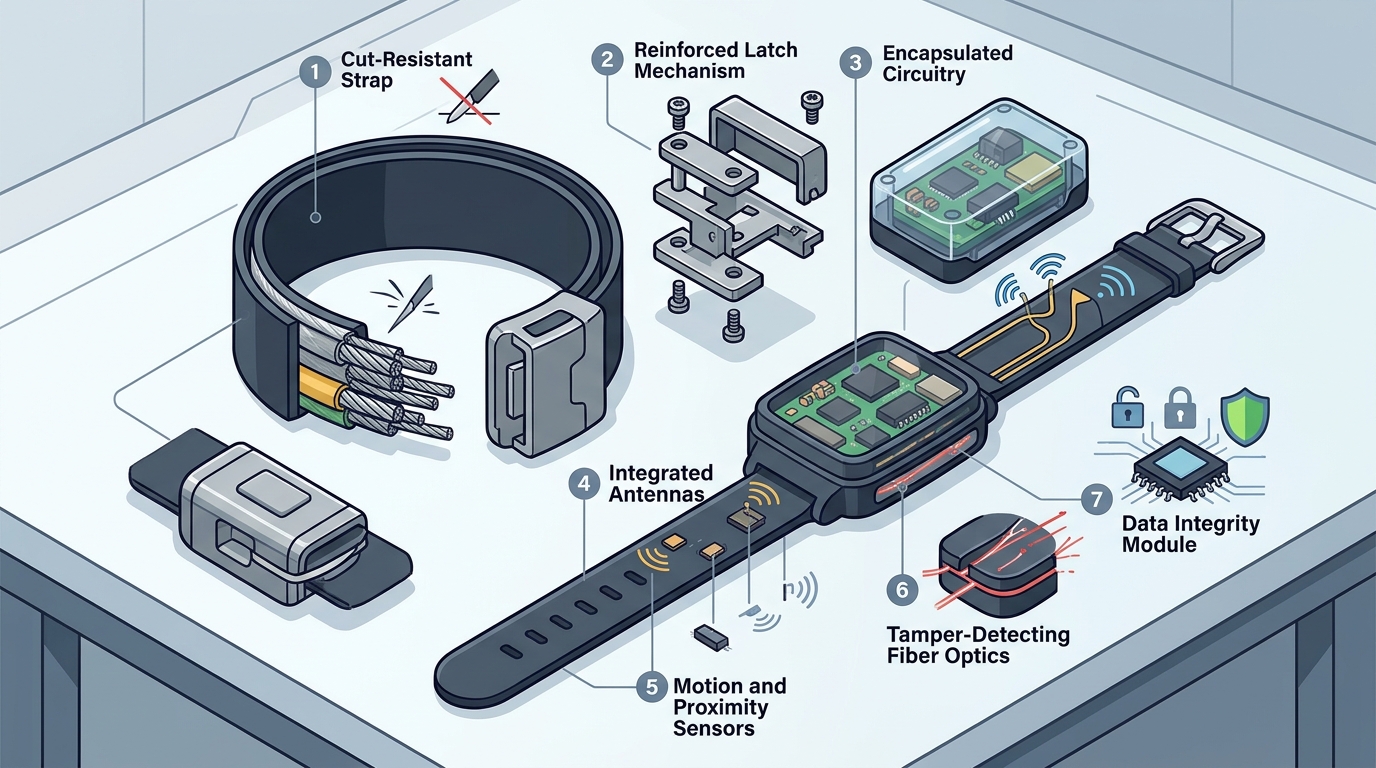
Fiber optic straps provide a physical barrier that triggers immediate alerts upon cutting. Traditional metal or plastic straps can be sawed or broken without triggering a reliable signal. Fiber optic technology detects the precise moment the strand is severed. This design significantly reduces false alerts caused by normal wear and tear.
2. Tamper Detection Sensors
Internal sensors monitor the device casing for unauthorized access or impact. These sensors detect when a user attempts to open the housing or strike the device. The system transmits a tamper alert to the monitoring center in real time. This feature ensures that physical interference is documented instantly.
3. Facial Recognition Verification
Adaptive facial recognition confirms the identity of the person wearing the device. This biometric feature prevents a monitored individual from passing the device to another person. The system captures high-resolution images during check-ins. It compares these images against a verified profile to ensure compliance.
4. Liveness Detection
Liveness detection technology distinguishes between a live human face and a static photo. This prevents fraud attempts using printed images or video loops. The system analyzes micro-movements and depth data. It ensures that the biometric check is performed by the actual subject.
5. Proximity Sensors
Proximity sensors detect when the device is removed from the body. These sensors monitor the distance between the device and the wearer's skin. If the device is removed, the system prompts an immediate biometric check-in. This feature adds a layer of security against device removal.
6. Waterproof Housing
Waterproof and submersible housings protect internal components from environmental damage. Monitored individuals are exposed to rain, sweat, and water activities. A durable housing prevents water ingress that could disable the device. This ensures continuous operation in all weather conditions.
7. Over-the-Air Updates
Over-the-air firmware updates allow agencies to patch security vulnerabilities remotely. This feature eliminates the need for physical device retrieval for software fixes. It ensures that the device maintains the latest security protocols. Remote updates reduce downtime and operational costs for monitoring programs.
Choosing the Right Tamper-Proof Device
Select a device that combines physical tamper resistance with biometric verification. Look for hardware that supports remote management and durable construction. JSG Monitoring offers a range of devices, including the Omnilink GPS and the BI LOC8 XT, both designed with robust tamper-proof features. For alcohol monitoring, the SCRAM Remote Breath integrates facial recognition to prevent proxy testing. Review the specific threat profile of your caseload to determine the necessary level of security. Contact JSG Monitoring to discuss your program's specific tamper resistance requirements.
Frequently Asked Questions
What is the most effective tamper-proof feature for ankle monitors?
Fiber optic straps are widely considered the most effective physical tamper-proof feature. They detect cutting attempts with high accuracy and low false alarm rates.
How does facial recognition prevent device sharing?
Facial recognition captures a biometric image during each check-in. It compares this image to a verified profile to ensure the correct individual is using the device.
Can monitoring devices be updated remotely?
Yes, many modern devices support over-the-air firmware updates. This allows agencies to apply security patches without retrieving the hardware.
What is liveness detection in monitoring devices?
Liveness detection is a technology that verifies a live human face is present. It prevents fraud using static photos or video recordings.
Why is waterproofing important for tamper resistance?
Waterproofing protects internal sensors from environmental damage. A compromised housing can disable tamper detection sensors, rendering the device ineffective.