
Understanding Setup Fees vs. Monitoring Fees
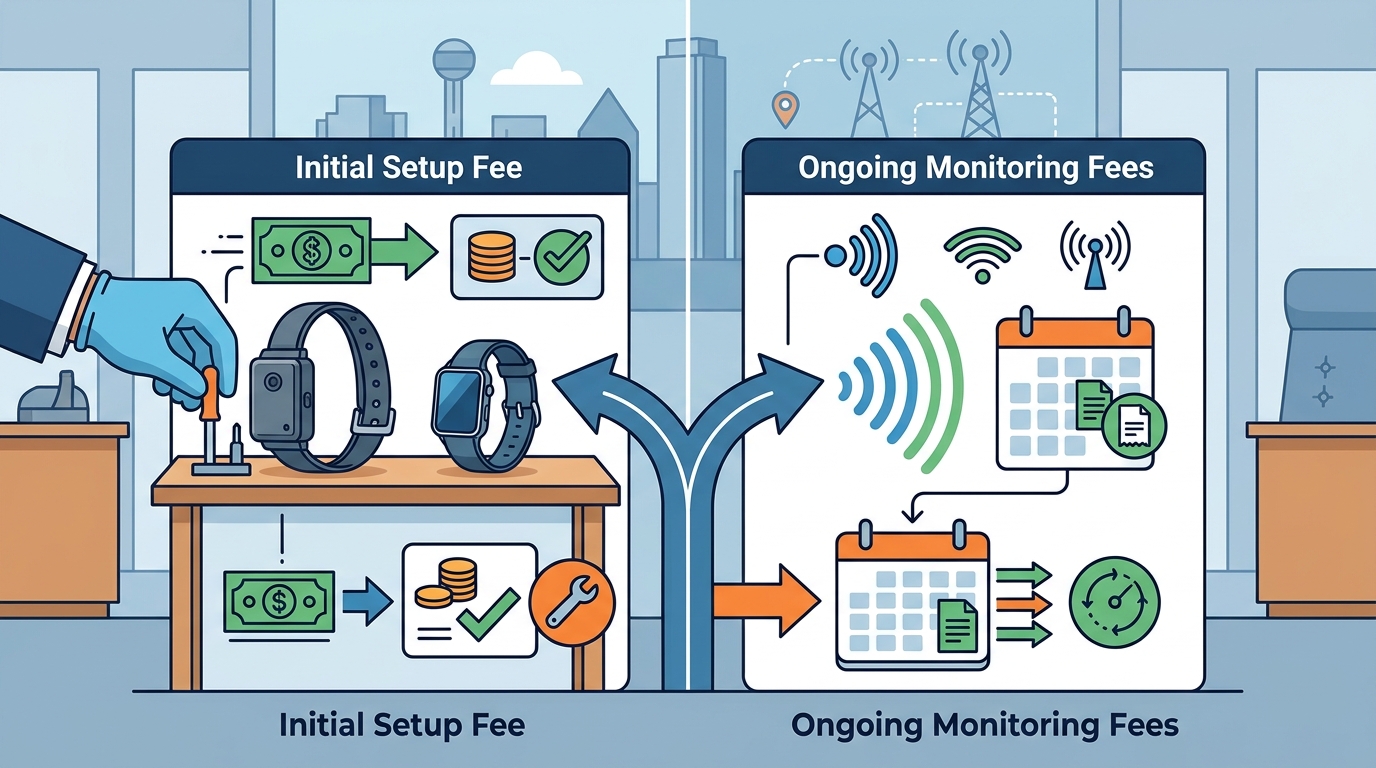
It is crucial to distinguish between the initial setup fee and the ongoing monitoring fees. A setup fee is a one-time charge assessed at the beginning of your monitoring period to cover the labor and materials required to install the device. In contrast, monitoring fees are recurring charges, often billed daily or monthly, that cover the service of tracking your location or alcohol consumption. Confusing these two types of fees is a common source of financial stress for participants in pretrial services.
In the Dallas County context, the Pretrial Services Office often assesses specific fees for their programs. For example, participants in the Alcohol Monitoring Supervision program may be required to pay a monthly monitoring fee, which is distinct from any initial equipment setup costs. Understanding this distinction helps you anticipate your total financial obligation. The setup fee is generally non-refundable, even if your monitoring period is shortened, because the labor and equipment preparation have already occurred.
For agencies and providers like JSG Monitoring, the setup process involves more than just handing a device to a participant. It includes verifying the device's functionality, ensuring the strap fits correctly, and configuring the software to match the specific court order. This technical preparation is what the setup fee compensates. By separating this from the daily service fee, providers can offer transparent pricing that reflects the actual cost of onboarding a new participant. according to Press Release New
Dallas-Specific Cost Structures
Dallas County has specific protocols for electronic monitoring that influence the final cost. The Pretrial Services Office in Dallas manages several programs, including the Electronic Monitoring (ELM) and Alternative Sentencing Program (ASP). Participants in these programs are often required to pay fees as indicated in local statutes and office policies. While the exact amount can vary based on the specific case and the type of device ordered, the structure remains consistent: an initial setup charge followed by recurring service fees.
For alcohol monitoring specifically, Dallas County requires participants to report monthly to an Alcohol Monitoring Technician for calibration verification. This ongoing requirement is part of the service fee, not the setup fee. However, the initial installation of the transdermal alcohol monitor or breathalyzer device will incur a setup cost. It is important to note that in some jurisdictions, the court may order the participant to pay these fees, while in others, the state or county may cover them. Always verify with your specific case officer whether the fees are your responsibility or the state's.
External reports indicate that electronic monitoring fees can be among the most costly and least transparent aspects of the justice system. A 50-state survey by the Fines and Fees Justice Center highlights that in most states, individuals on electronic monitoring are required to pay daily, weekly, or monthly fees. In Dallas, the setup fee is a critical component of this total cost. By understanding the local fee structure, participants can better manage their finances and avoid unexpected charges that might lead to violations of their supervision terms.
How Device Type Impacts Setup Costs
The type of electronic monitoring device ordered by the court significantly impacts the setup fee. GPS ankle monitors, such as the BI LOC8 XT or SCRAM GPS, typically have higher setup fees than basic radio frequency (RF) monitors. This is because GPS devices require more complex configuration, including the setup of exclusion zones, inclusion zones, and communication protocols. The setup fee for a GPS device covers the time required to program these specific parameters into the device and the monitoring software.
Alcohol monitoring devices also vary in cost based on their technology. The SCRAM Continuous Alcohol Monitoring (CAM) bracelet, which provides 24/7 transdermal testing, has a different setup profile than a handheld breathalyzer like the SCRAM Remote Breath. The CAM bracelet requires a more involved installation process to ensure the sensor is properly aligned with the skin for accurate readings. This technical precision is reflected in the setup fee. On the other hand, handheld devices may have lower setup fees because they do not require a physical installation on the body, but they may have higher recurring service fees due to the need for frequent check-ins.
At JSG Monitoring, we emphasize that the setup fee is an investment in the accuracy and reliability of the monitoring program. A properly installed device reduces the likelihood of false alarms and technical errors, which can lead to unnecessary court appearances or violations. By choosing a provider that prioritizes correct installation, participants can ensure that their monitoring experience is as smooth and fair as possible. The setup fee is not just a cost; it is a guarantee of proper device configuration.
Avoiding Hidden Fees and Unexpected Charges
One of the most common complaints from electronic monitoring participants is the presence of hidden fees. These can include charges for device replacement, late payments, or additional service calls. To avoid these unexpected costs, it is essential to ask your monitoring provider for a complete breakdown of all potential fees before you agree to the program. This should include the setup fee, the daily or monthly monitoring fee, and any potential additional charges for technical support or device replacement.
In Dallas, participants should be aware that failure to pay fees can lead to extended periods of supervision or even jail. The Pretrial Services Office has specific policies regarding payment and delinquency. By staying on top of your payments and understanding the fee structure, you can avoid these severe consequences. It is also important to keep records of all payments and communications with your monitoring provider. This documentation can be invaluable if there is a dispute over a fee or a technical issue.
Transparency is key in the electronic monitoring industry. Providers like JSG Monitoring are committed to offering clear and honest pricing. We believe that participants should know exactly what they are paying for and why. By choosing a provider that prioritizes transparency, you can have confidence that you are not being charged for hidden services or unnecessary add-ons. This approach helps build trust between the participant and the monitoring agency, which is essential for a successful supervision period. according to Electronic Monitoring Statistics
Financial Planning for Your Monitoring Period
Planning for the financial costs of electronic monitoring is an important part of managing your supervision. The setup fee is just the beginning; you also need to budget for the ongoing monitoring fees, which can add up over time. If your monitoring period is expected to last several months, the total cost can be significant. It is helpful to create a budget that accounts for these expenses, as well as any other costs associated with your supervision, such as transportation to check-ins or treatment programs.
For those who are struggling to pay their fees, it is important to communicate with your case officer or monitoring provider as soon as possible. Many providers offer payment plans or can work with you to find a solution that fits your financial situation. In some cases, the court may be able to adjust the fees or provide assistance. By being proactive and honest about your financial situation, you can avoid falling behind on your payments and potentially violating your supervision terms.
Electronic monitoring is a tool designed to support your rehabilitation and ensure public safety. By understanding the financial aspects of the program, you can focus on meeting your supervision requirements and working towards a successful outcome. The setup fee is a necessary part of this process, and by planning for it, you can take one step towards managing your monitoring period effectively. Remember, the goal is to complete your supervision successfully and move forward with your life.
Key Takeaways
- Setup fees are one-time charges, distinct from recurring daily or monthly monitoring fees.
- The type of device (GPS vs. RF vs. Alcohol) significantly impacts the setup cost.
- Dallas County Pretrial Services has specific fee structures for its ELM and ASP programs.
- Hidden fees can arise from device replacement or late payments; ask for a full breakdown.
- Failure to pay fees can lead to extended supervision or jail, so stay on top of payments.
- Transparency from your monitoring provider is essential for avoiding unexpected charges.
Frequently Asked Questions
How much is the setup fee for electronic monitoring in Dallas?
Is the setup fee refundable?
No, the setup fee is generally non-refundable. It covers the labor and materials required to install and configure the device, which have already occurred by the time the fee is charged.
What is the difference between a setup fee and a monitoring fee?
A setup fee is a one-time charge for installing the device. A monitoring fee is a recurring charge, often daily or monthly, that covers the service of tracking your location or alcohol consumption.
Who pays the setup fee in Dallas County?
In most cases, the participant is responsible for paying the setup fee. However, in some instances, the court or the state may cover these costs. You should verify with your case officer who is responsible for payment.
Can I pay the setup fee in installments?
What happens if I cannot afford the setup fee?
If you cannot afford the setup fee, you should communicate with your case officer or monitoring provider immediately. They may be able to work with you to find a solution or adjust the payment schedule.
Conclusion
Understanding the setup and installation fees for electronic monitoring in Dallas is essential for managing your supervision period effectively. By distinguishing between one-time setup costs and recurring monitoring fees, you can better budget for your total financial obligation. The type of device ordered by the court will significantly impact these costs, so it is important to ask for a detailed breakdown from your provider. At JSG Monitoring, we are committed to providing transparent and reliable electronic monitoring solutions. If you have questions about your specific fees or need guidance on the monitoring process, for personalized assistance.