

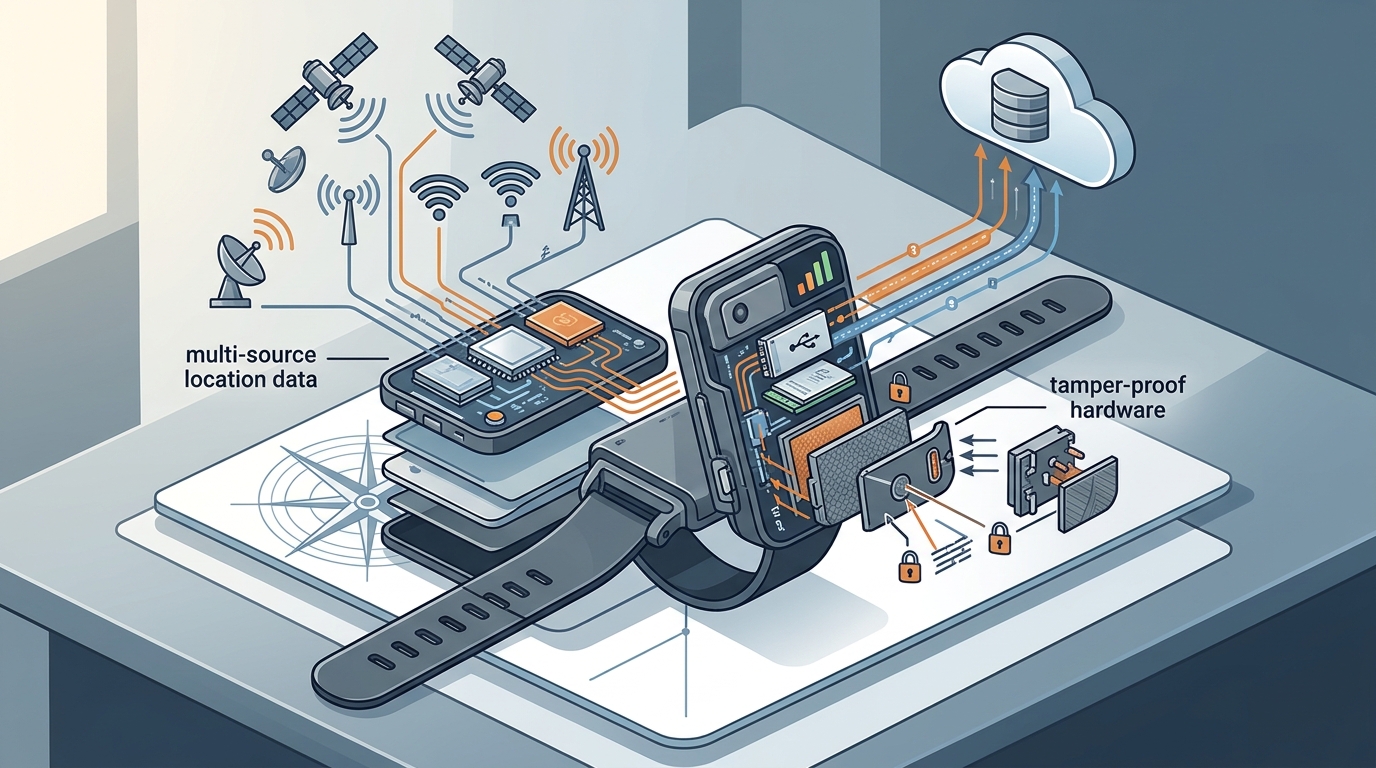
Modern GPS ankle monitors are reliable because they combine multi-source location data, tamper-proof hardware, and secure cloud connectivity. JSG Monitoring provides these advanced tools to support community supervision programs. By integrating GPS, Wi-Fi, and cellular technology, these devices ensure accurate tracking even in challenging environments. This multi-layered approach minimizes false alerts and maximizes data integrity for agencies.
Multi-Source Location Technology
Indoor and Urban Accuracy
Urban environments present unique challenges for tracking. Tall buildings can block satellite lines of sight. The BI LOC8 XT addresses this by leveraging Wi-Fi and cellular data to maintain accuracy. This capability is essential for verifying curfew compliance. It allows officers to confirm a client is inside a residence. Without this multi-source data, agencies might receive inaccurate location pings. This leads to unnecessary investigations and wasted resources.
Tamper-Proof Hardware Design
Hardware integrity is the backbone of any monitoring program. A tamper-proof design is a physical security feature that prevents unauthorized removal or modification of the device. If a device is removed, the system must detect it immediately. The Omnilink GPS OM500 features a cut-free, fiber optic strap. This design prevents false tamper alerts caused by normal wear and tear. It also ensures that actual removal attempts are detected instantly. This reliability reduces administrative burden on monitoring officers.
False Alert Reduction
False alerts are a major pain point in electronic monitoring. Traditional straps often trigger alarms due to friction or minor damage. The fiber optic technology in the OM500 eliminates these issues. It provides a clear signal when the strap is intact. If the strap is cut, the signal breaks, triggering an alert. This precision allows agencies to trust the data. It ensures that alerts represent genuine compliance violations. This trust is vital for maintaining the credibility of the program.
Secure Connectivity and Data Transmission
Reliable data transmission is essential for real-time monitoring. A secure connection is a network protocol that encrypts data to prevent interception or tampering. Devices must transmit location data to a central server securely. The SCRAM GPS uses 3G connectivity for this purpose. This ensures that data reaches the monitoring platform promptly. Secure transmission protects client privacy and program integrity. It prevents unauthorized access to sensitive location data. This security layer is non-negotiable for modern supervision programs.
Real-Time Data Availability
Real-time data allows officers to respond quickly to violations. Delays in data transmission can compromise public safety. The SCRAM GPS platform provides immediate access to location updates. Officers can view client movements on a map. This immediacy supports rapid decision-making. It allows for timely interventions when necessary. The reliability of the connection ensures that this data is always available. It provides a consistent stream of information for compliance reviews.
Software Integration and Analytics
Hardware alone is not enough for reliable monitoring. Software integration is the process of connecting device data to a central management platform. This integration allows for automated alerts and reporting. The SCRAM GPS integrates with the SCRAM Systems platform. This platform includes GPS Analytics and Google Street View mapping. These tools provide context for location data. Officers can see the physical environment around a client. This context helps in interpreting location pings accurately. It reduces the need for manual verification.
Actionable Insights
Analytics transform raw data into actionable insights. The SCRAM Systems platform offers detailed reporting capabilities. Officers can generate compliance reports with ease. These reports support court proceedings and case management. The software also allows for custom zone creation. Agencies can define exclusion zones for specific clients. This feature enhances the precision of monitoring. It ensures that clients adhere to court-ordered restrictions. The reliability of the software ensures that these tools are always accessible and accurate.
Key Takeaways
- Multi-source location technology combines GPS, Wi-Fi, and cellular data for continuous coverage.
- Tamper-proof hardware with fiber optic straps reduces false alerts and ensures immediate detection of removal.
- Secure connectivity protocols protect data integrity and client privacy during transmission.
- Software integration provides real-time access to location data and actionable analytics.
- Contextual mapping tools like Google Street View help officers interpret location data accurately.
- Reliable devices minimize administrative burden and support efficient case management.
- Choosing a provider with proven technology and support is critical for program success.
Frequently Asked Questions
How do modern ankle monitors work in GPS-impaired areas?
Modern devices use Wi-Fi and cellular triangulation when GPS signals are weak. This ensures continuous tracking in indoor or urban environments.
What prevents false tamper alerts on ankle monitors?
Fiber optic straps and advanced sensor technology distinguish between normal wear and actual tampering. This reduces unnecessary alerts for officers.
Is the data from GPS monitors secure?
Yes, data is transmitted over encrypted connections to secure cloud platforms. This protects client privacy and prevents unauthorized access.
Can officers view location data in real time?
Yes, integrated software platforms provide real-time mapping and alerts. Officers can monitor client movements as they happen.
How does software integration improve monitoring reliability?
Software integration automates reporting and provides contextual analytics. This allows officers to make informed decisions quickly.
What is the battery life of modern GPS ankle monitors?
Modern devices feature long-life batteries with rapid charging capabilities. This minimizes downtime and ensures continuous monitoring.
Conclusion
Reliability in GPS ankle monitors depends on robust hardware, secure connectivity, and intelligent software. JSG Monitoring offers a range of devices that meet these standards. By choosing technology that prioritizes accuracy and security, agencies can enhance public safety. To explore how these solutions can support your program, .