
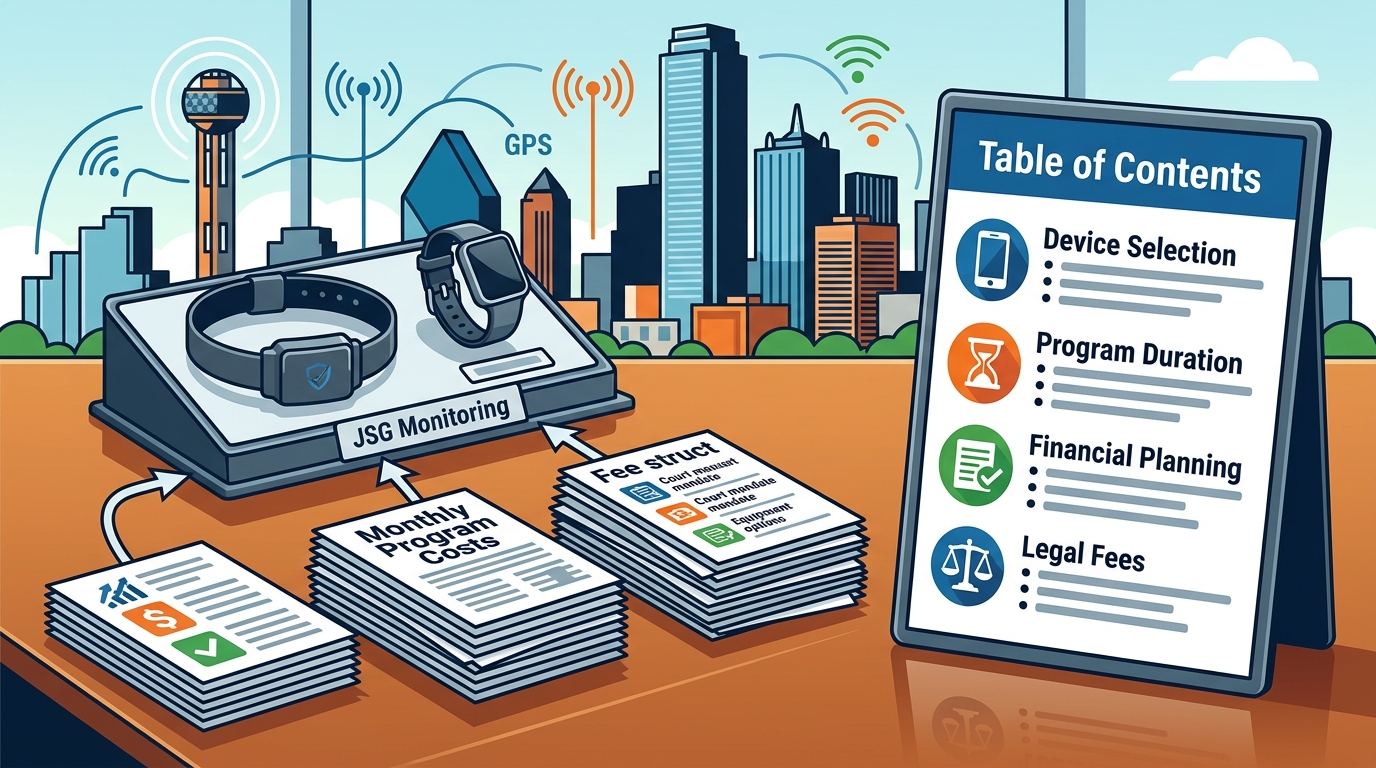
Electronic monitoring costs in Dallas, Texas, vary significantly based on device type, program duration, and specific court mandates. While exact figures depend on individual case details, understanding the pricing structure helps stakeholders budget effectively. This guide covers the key factors influencing these costs, from device selection to long-term program outcomes.
How to Choose a System
Selecting the right electronic monitoring system requires balancing technical capability with program goals. A good option provides reliable data, while a poor one creates administrative burdens. Electronic monitoring is a form of community supervision that uses technology to track an individual's location or behavior. The choice often depends on whether the program prioritizes location tracking, alcohol monitoring, or both.
Device Form Factors
Modern devices come in various form factors, each with distinct advantages. Ankle bracelets are the traditional standard, offering robust tracking capabilities. Wrist-worn devices, such as the BI VeriWatch, offer a more discreet alternative comparable in size to a consumer smartwatch. This discretion can improve compliance and reduce stigma for participants.
Connectivity and Coverage
Connectivity is a critical differentiator. Systems using GPS, Wi-Fi, and cellular technology ensure complete community coverage. The BI LOC8 XT utilizes all three technologies to maintain accurate location tracking even in areas with GPS interference. This multi-modal approach is essential for urban environments like Dallas, where signal degradation can occur in dense structures.
Questions to Ask Before Committing
Before selecting a provider, stakeholders should ask specific questions to ensure the system meets their needs. These questions help uncover hidden costs and operational limitations. Asking the right questions prevents costly mistakes and ensures long-term success.
Technical Capabilities
Ask about the device's battery life and charging requirements. For example, the BI VeriWatch offers up to 16 hours of battery life on a single charge, extending to 24 hours with a portable transfer battery. Inquire about the device's ability to function in GPS-impaired environments. The Omnilink GPS OM500 uses optional RF and Wi-Fi Beacons for precise indoor tracking, which is crucial for home curfew monitoring.
Support and Integration
Question the provider's support structure. Does the company offer 24/7 technical support? JSG Monitoring partners with trusted suppliers who operate 24/7/365 monitoring centers, providing constant support and oversight. Also, ask about software integration. The Omnilink GPS integrates seamlessly with FocalPoint software, allowing for real-time visualization and mapping of offender movements.
Verifying Claims and Credentials
Verifying a provider's claims is essential to ensure reliability. Verification is the process of confirming that a provider's stated capabilities and credentials are accurate. This step protects agencies from investing in underperforming technology.
Check for Tamper Detection
Look for robust tamper detection features. The BI LOC8 XT features robust tamper detection to ensure immediate alerts in case of tampering attempts. Verify that the system provides clear, actionable alerts rather than false positives. The Omnilink GPS uses a cut-free, fiber optic strap to prevent false tamper alerts, reducing administrative burdens.
Review Software Features
Examine the software platform's capabilities. The SCRAM GPS integrates with the SCRAM Systems platform, offering GPS Analytics and Google Street View mapping. These tools provide detailed insights into client movements, putting their locations into a clear, actionable context. Verify that the software allows for easy zone creation and real-time tracking.
How the Process Works
Understanding the workflow of electronic monitoring helps set realistic expectations. The process involves device installation, ongoing monitoring, and data review. Each step is designed to ensure compliance and public safety.
Installation and Onboarding
The process begins with device installation. For ankle devices, this involves securing the bracelet to the participant's ankle. For wrist-worn devices like the BI VeriWatch, the device is worn on the wrist, similar to a smartwatch. The installation process is quick and non-invasive. Participants are then trained on how to use the device and what to expect during monitoring.
Ongoing Monitoring
Once installed, the device begins transmitting data. The BI LOC8 XT provides minute-by-minute location tracking through advanced mapping software. This data is transmitted to a secure web portal, where monitoring officers can review it in real time. The system generates instant alerts for tampering or zone breaches, allowing for immediate intervention if necessary.
Cost Drivers and Pricing
Costs for electronic monitoring systems in Dallas, Texas, are influenced by several factors. Cost drivers are the variables that determine the final price of a monitoring program. Understanding these drivers helps stakeholders budget accurately.
Device Type and Features
The type of device used significantly impacts cost. GPS tracking devices, such as the SCRAM GPS, typically cost more than basic RF monitoring due to their advanced features. Alcohol monitoring devices, like the SCRAM Continuous bracelet, also command a premium due to their specialized technology. The BI SL3 portable alcohol breathalyzer offers a cost-effective alternative for remote alcohol monitoring.
Program Duration and Volume
The duration of the monitoring program and the number of participants also affect costs. Longer programs may benefit from volume discounts, while shorter programs may incur higher per-unit costs. Agencies should consider the total cost of ownership, including device maintenance, software licensing, and support services.
| BI LOC8 XT | GPS/Wi-Fi/Cellular Tracking | Low-profile, tamper detection, over-the-air updates | Medium |
| SCRAM GPS | GPS Tracking | Tamper-proof strap, 3G connectivity, GPS Analytics | High |
| SCRAM Continuous | Transdermal Alcohol Testing | 24/7 testing, optional home curfew | High |
| BI SL3 | Remote Alcohol Monitoring | Facial recognition, GPS, LTE technology | Medium |
Common Mistakes to Avoid
Avoiding common mistakes ensures the success of an electronic monitoring program. These mistakes often stem from inadequate planning or poor device selection. Proactive measures can mitigate these risks.
Ignoring Connectivity Issues
One common mistake is ignoring connectivity issues in urban environments. The BI LOC8 XT addresses this by using GPS, Wi-Fi, and cellular technology to ensure complete community coverage. Agencies should verify that the chosen device can function reliably in all areas where participants may reside or work.
Underestimating Support Needs
Another mistake is underestimating the need for ongoing support. JSG Monitoring provides a robust training library and seamless integration with proven monitoring programs. Agencies should ensure that the provider offers comprehensive training and 24/7 technical support to address any issues that may arise.
Comparison with Alternatives
Electronic monitoring offers several advantages over traditional incarceration. Comparing these options helps stakeholders make informed decisions. Each alternative has its own set of benefits and limitations.
Cost-Effectiveness
Electronic monitoring is generally more cost-effective than incarceration. It allows agencies to manage offenders in the community, reducing the burden on overcrowded jails. The JSG Monitoring solutions for courts and law enforcement provide cost-effective alternatives to incarceration, ensuring public safety while alleviating the burden on jails.
Compliance and Safety
Electronic monitoring enhances compliance and improves resource allocation. Real-time violation alerts and detailed compliance reports allow law enforcement and court personnel to act quickly when it matters most. The JSG Monitoring platform ensures that agencies have the tools they need to manage compliance effectively.
Costs for Specific Situations
Costs can vary depending on the specific situation. Different types of offenders and cases may require different monitoring solutions. Tailoring the solution to the specific case ensures optimal outcomes.
High-Risk Alcohol Offenders
For high-risk alcohol offenders, the SCRAM Continuous bracelet is often the preferred solution. It provides 24/7 transdermal alcohol testing and optional home curfew monitoring. This dual-purpose solution ensures accountability and compliance, supporting treatment programs and enhancing public safety.
Lower-Risk Offenders
For lower-risk offenders, the SCRAM Remote Breath offers a flexible and reliable monitoring option. This handheld, wireless breath alcohol device combines automated facial recognition with GPS location tracking for every test. It is ideal for individuals who have earned less intensive supervision, offering a practical and scalable approach to managing diverse caseloads.
Rules and Protections
Electronic monitoring programs are governed by specific rules and protections. These rules ensure that the rights of participants are respected while maintaining public safety. Understanding these rules is essential for both agencies and participants.
Privacy and Data Security
Privacy and data security are paramount in electronic monitoring. The BI SL3 uses government-grade security software to protect data. Agencies must ensure that the provider complies with all relevant data protection regulations. This includes secure data transmission and storage, as well as strict access controls.
Participant Rights
Participants in electronic monitoring programs have certain rights that must be respected. These include the right to be informed about the monitoring process, the right to appeal violations, and the right to privacy. Agencies should provide clear guidelines to participants, outlining their rights and responsibilities.
Local Specifics in Dallas
Local specifics in Dallas, Texas, can influence the implementation of electronic monitoring programs. Understanding these specifics helps agencies tailor their solutions to the local context. Dallas's unique urban environment presents both challenges and opportunities for electronic monitoring.
Urban Connectivity
Dallas's dense urban environment can pose challenges for GPS tracking. The BI LOC8 XT is designed to address these challenges, using GPS, Wi-Fi, and cellular technology to ensure accurate location tracking even in areas with GPS interference. This multi-modal approach is essential for maintaining reliable monitoring in urban settings.
Community Partnerships
Community partnerships are crucial for the success of electronic monitoring programs in Dallas. JSG Monitoring works closely with courts, law enforcement, and monitoring companies to deliver tailored solutions. These partnerships ensure that the technology is integrated seamlessly into existing programs, enhancing accountability and public safety.
Timing and Outcomes
Timing plays a critical role in the success of electronic monitoring programs. Acting at the right time can significantly impact outcomes. Agencies should consider the timing of device installation and the duration of the monitoring period.
Early Intervention
Early intervention is key to preventing recidivism. Implementing electronic monitoring early in the supervision process can help identify and address issues before they escalate. The JSG Monitoring solutions provide real-time alerts and detailed compliance reports, allowing for timely intervention.
Long-Term Planning
Long-term planning is essential for sustainable outcomes. Agencies should consider the long-term benefits of electronic monitoring, including reduced recidivism and improved community safety. The JSG Monitoring team provides expert guidance and support to help agencies achieve long-term success.
Long-Term Results
Long-term results demonstrate the effectiveness of electronic monitoring programs. Measurable outcomes provide evidence of the program's impact. Agencies should track key performance indicators to assess the program's success over time.
Reduced Recidivism
Electronic monitoring has been shown to reduce recidivism rates. By providing continuous monitoring and real-time alerts, agencies can intervene quickly when violations occur. The JSG Monitoring platform helps agencies reduce recidivism, enhance compliance, and improve community safety.
Improved Compliance
Improved compliance is another key outcome of electronic monitoring. The SCRAM GPS and other devices ensure that defendants meet court-ordered conditions. Real-time alerts for violations or tampering allow agencies to take immediate action, improving overall compliance rates.
Key Takeaways
- Electronic monitoring costs in Dallas vary based on device type, program duration, and specific court mandates.
- Choosing the right device involves balancing technical capability with program goals, considering form factors and connectivity.
- Asking specific questions about technical capabilities and support structures helps uncover hidden costs and operational limitations.
- Verifying claims and credentials ensures reliability, focusing on tamper detection and software features.
- Cost drivers include device type, program duration, and volume, with GPS and alcohol monitoring devices typically commanding a premium.
- Common mistakes include ignoring connectivity issues and underestimating support needs, which can be mitigated through proactive planning.
- Electronic monitoring is more cost-effective than incarceration, enhancing compliance and improving resource allocation.
- Local specifics in Dallas, such as urban connectivity and community partnerships, influence the implementation and success of monitoring programs.
Frequently Asked Questions
How much does electronic monitoring cost in Dallas, Texas?
Costs vary based on device type and program duration. GPS and alcohol monitoring devices typically cost more than basic RF monitoring. Exact figures depend on individual case details and provider pricing.
What is the difference between ankle and wrist-worn devices?
How does connectivity affect monitoring reliability?
Connectivity is critical for reliable monitoring. Devices using GPS, Wi-Fi, and cellular technology, such as the BI LOC8 XT, ensure complete community coverage even in areas with GPS interference.
What questions should I ask a monitoring provider?
Ask about battery life, charging requirements, and the device's ability to function in GPS-impaired environments. Also, inquire about support structures and software integration capabilities.
How can I verify a provider's claims?
Verify claims by checking for robust tamper detection features and reviewing software capabilities. Look for providers that offer clear, actionable alerts and detailed insights into client movements.
What are the common mistakes in electronic monitoring?
Common mistakes include ignoring connectivity issues in urban environments and underestimating the need for ongoing support. Proactive planning and comprehensive training can mitigate these risks.
How does electronic monitoring compare to incarceration?
Electronic monitoring is generally more cost-effective than incarceration. It allows agencies to manage offenders in the community, reducing the burden on jails while enhancing compliance and public safety.
What are the local specifics for electronic monitoring in Dallas?
Dallas's dense urban environment poses challenges for GPS tracking. Devices like the BI LOC8 XT address these challenges using multi-modal connectivity. Community partnerships are also crucial for program success.