
What criteria should courts use when selecting monitoring vendors?
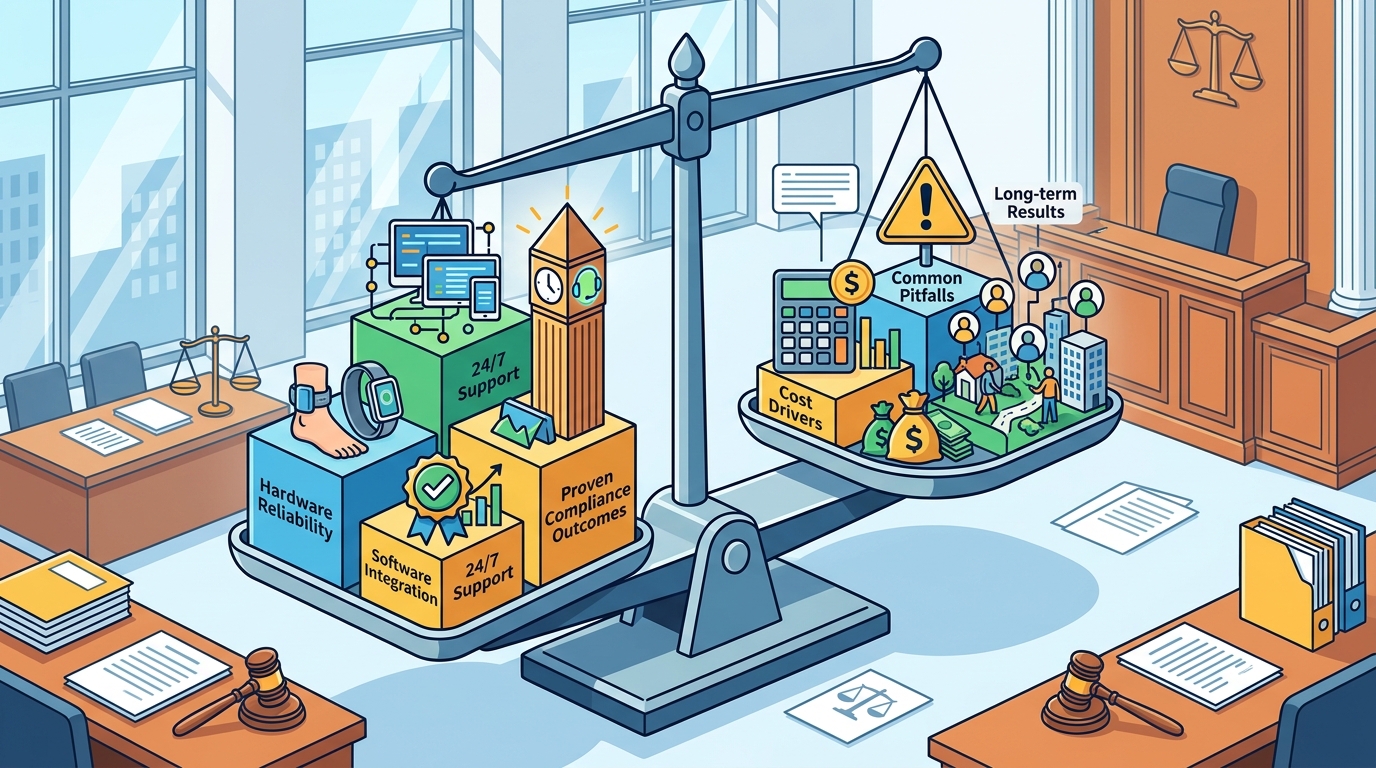
Courts should select monitoring vendors based on hardware reliability, software integration, 24/7 support, and proven compliance outcomes. This guide covers the essential criteria for choosing, verifying, and implementing electronic monitoring systems. It details cost drivers, common pitfalls, and long-term results to help judicial systems make informed decisions.
How to Choose a Vendor
Electronic monitoring vendor selection is a critical decision that impacts public safety and judicial efficiency. A reliable vendor provides more than just hardware; they offer a comprehensive ecosystem of support and technology. The primary differentiator between a good and a bad vendor is the depth of their partnership model. Top-tier providers like JSG Monitoring focus on tailored solutions rather than one-size-fits-all equipment. They work closely with courts to customize policies, procedures, and training. This ensures the technology fits the specific operational needs of the agency.
Hardware Reliability and Discretion
Hardware must be durable, tamper-resistant, and discreet. Modern devices, such as the BI LOC8 XT, utilize GPS, Wi-Fi, and cellular technology for complete coverage. Discretion is vital for offender compliance. Devices that look like consumer electronics reduce stigma and improve adherence. Vendors should offer both ankle and wrist-worn options to accommodate different case types.
Software Integration Capabilities
The software platform is the brain of the monitoring system. It must integrate seamlessly with existing court management systems. Look for platforms that offer real-time alerts and detailed compliance reports. The JSG Monitoring product suite features seamless software integration, allowing officers to visualize offender movements in real time. This reduces manual effort and speeds up response times to violations.
What to Ask Before Committing
Support and Response Times
Ask about the availability of technical support. Does the vendor offer 24/7/365 monitoring center support? What is the average response time for a tamper alert? JSG Monitoring partners operate 24/7/365 monitoring centers, providing constant support and oversight. This ensures that critical alerts are addressed immediately, even outside business hours.
Training and Onboarding
Inquire about the training library and onboarding process. Does the vendor provide comprehensive training for court staff and monitoring officers? A robust training program ensures that all users are proficient with the technology. This minimizes errors and maximizes the effectiveness of the monitoring program.
How to Verify Claims
Vendors often make bold claims about their technology and outcomes. Courts must verify these claims through independent evidence. Verification ensures that the vendor delivers on its promises.
Check for Proven Results
Request case studies and data on recidivism reduction. Look for evidence that the vendor has successfully implemented programs in similar jurisdictions. JSG Monitoring reports that courts and law enforcement agencies across multiple states have reduced recidivism and enhanced compliance through their partnerships. This data provides a benchmark for expected outcomes.
Validate Technical Specifications
Verify technical specs such as battery life, connectivity, and tamper detection. Request a live demonstration of the hardware and software. Test the devices in various environments, including GPS-impaired areas. This hands-on verification ensures the technology performs as advertised.
Implementation Process
Implementing a new monitoring vendor involves several distinct phases. Understanding this process helps courts plan resources and timelines effectively. The process typically moves from assessment to full deployment.
Assessment and Customization
The first phase involves assessing the court's specific needs. The vendor works with the agency to customize the program, including policies and procedures. This ensures the solution aligns with local laws and operational workflows.
Deployment and Training
Once the program is designed, the vendor deploys the hardware and software. Staff receive training on device installation, software usage, and alert management. This phase is critical for ensuring smooth adoption and minimizing disruption to daily operations.
Cost Drivers
Understanding cost drivers helps courts budget accurately for electronic monitoring programs. Prices vary based on several factors, including device type, monitoring intensity, and support levels.
Device Type and Features
Advanced devices with multiple connectivity options and biometric features cost more than basic units. For example, the SCRAM GPS offers unmatched location accuracy and industry-leading battery life, which may carry a premium price. However, the long-term savings from reduced recidivism and jail overcrowding often offset the initial investment.
Support and Integration
24/7 support and seamless software integration add to the cost but provide significant value. These features reduce administrative burdens and improve response times. Courts should weigh the total cost of ownership against the benefits of enhanced compliance and public safety.
Common Mistakes
Courts often make avoidable mistakes when selecting monitoring vendors. Recognizing these pitfalls can save time and money.
Ignoring Support Quality
Choosing a vendor solely on price often leads to poor support. Inadequate support results in delayed responses to alerts and frustrated staff. Always prioritize vendors with proven 24/7 support capabilities.
Lack of Customization
Implementing a rigid, one-size-fits-all solution fails to address unique local needs. Customization ensures the program fits the court's specific context. This improves compliance and outcomes.
Vendor vs. Alternatives
Courts have several options for electronic monitoring, including in-house solutions and third-party vendors. Each option has distinct advantages and disadvantages.
| Option | Advantages | Disadvantages |
|---|---|---|
| Third-Party Vendor | Expert support, advanced technology, scalable | Recurring costs, dependency on vendor |
| In-House | Full control, lower long-term costs | High initial investment, limited expertise |
Third-party vendors like JSG Monitoring offer the benefit of specialized expertise and advanced technology. They handle the complexities of hardware and software, allowing courts to focus on judicial functions. In-house solutions provide more control but require significant investment in infrastructure and staff training.
Situation-Specific Criteria
Different case types require different monitoring criteria. Courts should tailor their vendor selection to the specific population they are monitoring.
Alcohol Offenders
For DUI offenders, continuous alcohol monitoring is essential. The SCRAM Continuous bracelet provides 24/7 transdermal alcohol testing, eliminating testing gaps. This is critical for high-risk alcohol offenders who need constant supervision.
Domestic Violence Cases
In domestic violence cases, victim notification systems are vital. Vendors should offer advanced victim notification services that ensure timely alerts. This enhances accountability and promotes public safety for victims.
Rules and Protections
Electronic monitoring programs must comply with legal and ethical standards. Courts must ensure that their vendors adhere to these rules.
Data Privacy and Security
Vendors must implement robust data security measures to protect offender information. This includes encryption and secure data transmission. Compliance with data privacy laws is non-negotiable.
Due Process
Local Specifics
Local factors influence the effectiveness of electronic monitoring programs. Courts should consider their specific geographic and demographic context.
Geographic Coverage
Rural areas may have limited cellular coverage. Vendors should offer devices with multiple connectivity options, such as the Omnilink GPS, which uses GPS, Wi-Fi, and cellular technology for complete community coverage. This ensures reliable tracking even in remote locations.
Community Partnerships
Building partnerships with local law enforcement and community organizations enhances program success. Vendors should facilitate these connections to create a cohesive support network for offenders.
Timing Considerations
Timing is crucial when implementing a new monitoring vendor. Courts should plan for a phased rollout to minimize disruption.
Phased Implementation
Start with a pilot program to test the technology and processes. This allows for adjustments before full-scale deployment. A phased approach reduces risk and ensures a smoother transition.
Long-Term Results
Electronic monitoring programs deliver measurable outcomes over time. Courts should track key metrics to evaluate program success.
Recidivism Reduction
Studies show that electronic monitoring can reduce recidivism rates. By providing a cost-effective alternative to incarceration, these programs help offenders reintegrate into society. Long-term tracking of recidivism data helps courts refine their strategies.
Cost Savings
Electronic monitoring is significantly cheaper than incarceration. By reducing jail overcrowding, courts save substantial resources. These savings can be reinvested in other public safety initiatives.
Key Takeaways
- Select vendors based on hardware reliability, software integration, and 24/7 support.
- Verify vendor claims through case studies and live demonstrations.
- Customize the program to fit local laws and operational needs.
- Consider cost drivers such as device type and support levels.
- Tailor criteria to specific case types, such as alcohol or domestic violence.
- Ensure compliance with data privacy and due process rules.
- Plan for a phased implementation to minimize disruption.
Frequently Asked Questions
What is the most important criterion for selecting a monitoring vendor?
The most important criterion is the depth of the partnership model. A reliable vendor provides tailored solutions, comprehensive training, and 24/7 support, ensuring the technology fits the court's specific needs.
How does JSG Monitoring support courts?
JSG Monitoring supports courts by providing innovative electronic monitoring solutions, tailored equipment, and a robust training library. They work closely with agencies to customize programs and ensure smooth implementation.
What types of devices does JSG Monitoring offer?
JSG Monitoring offers a range of devices, including GPS tracking devices, alcohol monitoring tools, and victim notification systems. Their products feature precise location tracking, tamper-resistant designs, and seamless software integration.
How can courts verify a vendor's claims?
Courts can verify claims by requesting case studies, checking for proven results in similar jurisdictions, and conducting live demonstrations of the hardware and software.
What are the cost drivers for electronic monitoring?
Cost drivers include device type, monitoring intensity, support levels, and software integration. Advanced devices with multiple features may cost more but offer long-term savings through reduced recidivism.
How does timing affect implementation?
Timing is crucial for a smooth transition. Courts should plan for a phased rollout, starting with a pilot program to test the technology and processes before full-scale deployment.
What are the long-term results of electronic monitoring?
Long-term results include reduced recidivism rates and significant cost savings. By providing a cost-effective alternative to incarceration, these programs help offenders reintegrate into society and reduce jail overcrowding.
Conclusion
Selecting the right monitoring vendor is a strategic decision that impacts public safety and judicial efficiency. By focusing on hardware reliability, software integration, and 24/7 support, courts can build effective monitoring programs. JSG Monitoring is ready to provide the right monitoring solutions for your needs. Contact them today to learn more about their products and services.