

Which Monitoring Hardware Uses Wi-Fi and Cellular Technology for Accurate Tracking?
Modern electronic monitoring hardware uses Wi-Fi and cellular technology to provide accurate, real-time location tracking that works in both indoor and outdoor environments. JSG Monitoring supplies these advanced devices to courts and law enforcement agencies, ensuring reliable compliance and public safety. This guide covers the specific hardware types, indoor positioning systems, and technical specifications that define modern tracking capabilities.
Ankle Monitor Technology
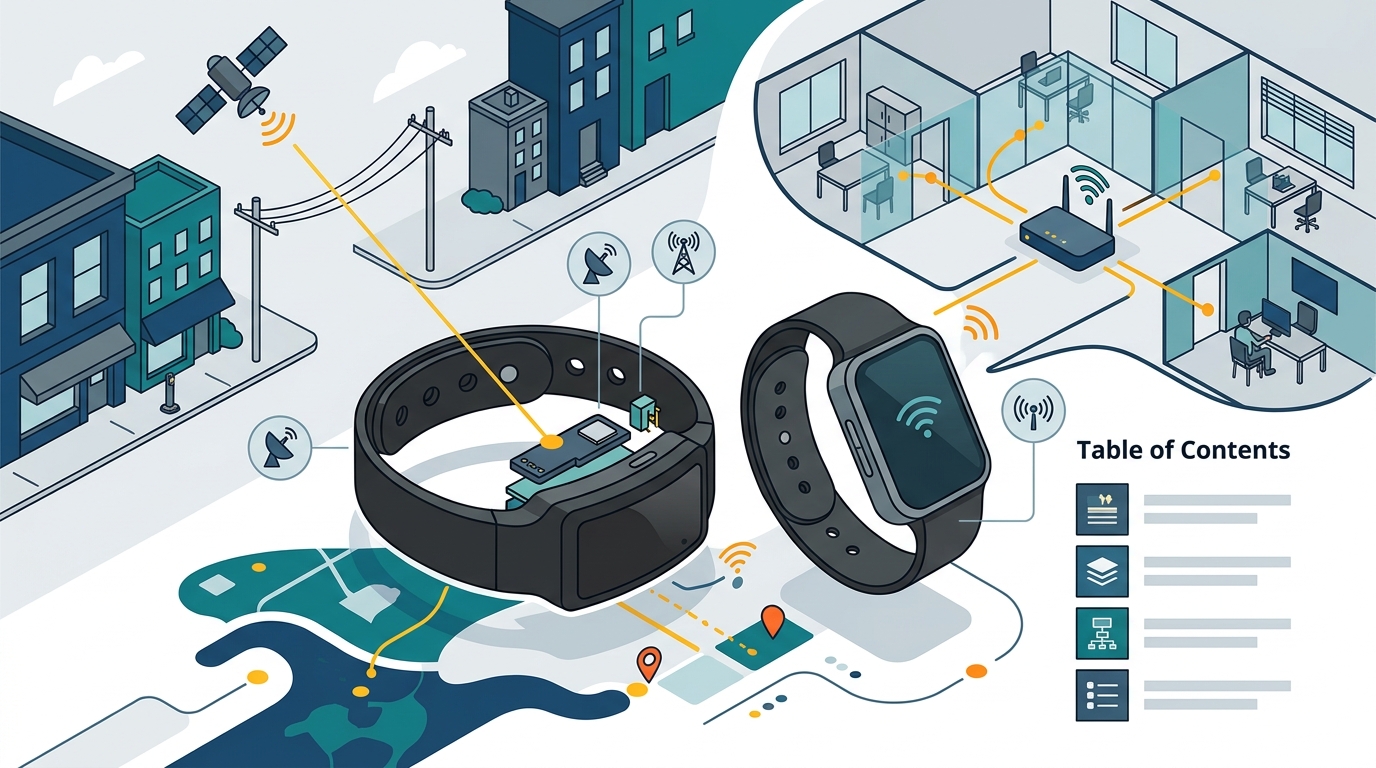
Ankle monitor technology is a category of electronic devices worn on the lower leg that utilize satellite, cellular, and wireless signals to determine and transmit a wearer's location. Traditional GPS units rely solely on satellite signals, which can be weak or unavailable indoors. Modern hardware integrates multiple communication protocols to bridge this gap. By combining GPS with Wi-Fi and cellular data, these devices maintain continuous connectivity even when satellite reception is obstructed by buildings or terrain.
Multi-Mode Connectivity
Real-Time Data Transmission
Cellular technology allows for the immediate transmission of location data to a central monitoring server. Unlike older systems that stored data locally and uploaded it later, modern devices send updates in real-time. This capability is critical for agencies that need to respond quickly to zone violations or curfew breaches. The integration of 4G and 5G networks further enhances the speed and reliability of these data transmissions.
Indoor Positioning Systems
Indoor positioning systems are technologies that determine the location of a device inside a building where GPS signals are typically too weak to function. These systems are essential for electronic monitoring because a significant portion of a monitored individual's time is spent indoors. Without indoor positioning, a monitoring program would have blind spots during the hours when the wearer is at home or work.
Wi-Fi Fingerprinting
Wi-Fi fingerprinting is a method that uses the signal strength of nearby Wi-Fi access points to calculate a device's position. The device scans for available networks and compares the signal strengths to a pre-mapped database. This technique allows for location accuracy that is sufficient for determining whether a person is inside a specific building or zone. It is a passive process that does not require the wearer to take any action.
Cellular Triangulation
Cellular triangulation is a technique that estimates a device's location based on its distance from multiple cell towers. By measuring the signal strength or time delay from at least three towers, the system can calculate a probable location. While less precise than GPS, this method provides a reliable fallback when both GPS and Wi-Fi signals are unavailable. It ensures that the monitoring system always has some form of location data. according to Vehicle tracking system
Integration with Monitoring Platforms
Indoor positioning data is integrated directly into the monitoring software platform. The platform displays the location on a map, often using visual cues to indicate the source of the location fix (e.g., GPS, Wi-Fi, or Cellular). This transparency helps monitoring officers understand the context of the data. For example, a location fix derived from Wi-Fi might be displayed with a different icon than one derived from GPS, allowing officers to assess the accuracy of the data.
Ankle Bracelet Hardware
Ankle bracelet hardware is the physical component of an electronic monitoring system that houses the sensors, communication modules, and battery. The design of this hardware is critical for both the accuracy of the tracking and the comfort of the wearer. Modern ankle bracelets are designed to be low-profile and discreet, reducing the stigma associated with wearing a monitoring device. They are also built to be tamper-resistant, ensuring that the data collected is reliable and admissible in court.
Device Form Factors
Tamper Detection and Security
Security is a paramount concern in electronic monitoring hardware. Modern devices feature robust tamper detection systems that alert the monitoring center if the device is removed or damaged. These systems use a combination of physical sensors and software algorithms to distinguish between accidental damage and intentional tampering. The hardware is also designed to be waterproof and durable, ensuring that it can withstand the rigors of daily use.
Battery Life and Charging
Battery life is a key specification for ankle bracelet hardware. Most modern devices offer a battery life of several days on a single charge. This reduces the frequency with which the wearer needs to charge the device, improving compliance. The charging mechanism is typically a magnetic connector that attaches to the device, making it easy to use. Some devices also feature a portable transfer battery that can extend the battery life further.
Comparison of Monitoring Hardware
| Feature | BI LOC8 XT | Omnilink GPS | BI VeriWatch |
|---|---|---|---|
| Form Factor | Ankle-worn | Ankle-worn | Wrist-worn |
| Location Technology | GPS, Wi-Fi, Cellular | GPS, Cellular, RF, Wi-Fi Beacons | GPS, Wi-Fi, Cellular |
| Indoor Positioning | Yes (Wi-Fi) | Yes (RF, Wi-Fi Beacons) | Yes (Wi-Fi) |
| Tamper Detection | Robust | Cut-free fiber optic strap | Proximity sensor, Biometric check-in |
| Identity Verification | Not specified | Not specified | Biometric facial comparison |
| Battery Life | Power-saving beacon option | Rapid-charging, long-life | Up to 16-24 hours |
Key Takeaways
- Modern ankle monitors use a combination of GPS, Wi-Fi, and cellular technology to ensure continuous location tracking.
- Indoor positioning systems, such as Wi-Fi fingerprinting and cellular triangulation, are essential for tracking wearers inside buildings.
- Cellular technology enables real-time data transmission, allowing monitoring centers to respond quickly to violations.
- Wrist-worn devices offer a discreet alternative to traditional ankle bracelets while providing the same tracking capabilities.
- Tamper detection and security features are critical for ensuring the reliability and admissibility of monitoring data.
- Battery life and charging convenience are important factors that impact wearer compliance.
- Monitoring platforms integrate data from multiple sources to provide a comprehensive view of the wearer's location.
- Choosing the right hardware depends on the specific needs of the monitoring program, including discretion, accuracy, and security.
Frequently Asked Questions
What is the difference between GPS and Wi-Fi tracking?
GPS tracking uses satellite signals to determine location, which is highly accurate outdoors but weak indoors. Wi-Fi tracking uses the signal strength of nearby access points to estimate location, making it effective indoors. Modern devices use both to ensure continuous coverage. according to GPS tracking unit
How does cellular technology contribute to monitoring?
Cellular technology allows the device to transmit location data to the monitoring center in real-time. It also serves as a backup location source when GPS and Wi-Fi signals are unavailable, ensuring that the device is always tracked.
Are wrist-worn devices as accurate as ankle-worn devices?
Yes, wrist-worn devices use the same underlying technology for location tracking as ankle-worn devices. The accuracy is determined by the quality of the GPS, Wi-Fi, and cellular modules, not the form factor of the device.
What happens if a device loses its GPS signal?
If a device loses its GPS signal, it automatically switches to Wi-Fi or cellular positioning. This ensures that the monitoring center continues to receive location data, even if the wearer is indoors or in an area with poor satellite reception.
How often does the device need to be charged?
Most modern devices offer a battery life of several days on a single charge. The specific frequency depends on the model and the intensity of the monitoring program. Some devices also offer a portable transfer battery to extend usage.
Can the device be tampered with?
Modern devices are designed with robust tamper detection systems that alert the monitoring center if the device is removed or damaged. The hardware is also built to be durable and waterproof, making it difficult to tamper with.
What is the role of the monitoring platform?
The monitoring platform receives and displays the location data from the device. It allows monitoring officers to view the wearer's location on a map, set up zones, and receive alerts for violations. The platform integrates data from multiple sources to provide a comprehensive view.
Is the data from these devices admissible in court?
Yes, data from modern electronic monitoring devices is generally admissible in court, provided that the device is properly calibrated and maintained. The robust security and tamper detection features of modern hardware help ensure the reliability of the data.
Conclusion
Choosing the right monitoring hardware is critical for the success of any electronic monitoring program. By utilizing Wi-Fi and cellular technology alongside GPS, modern devices provide accurate, real-time tracking in all environments. JSG Monitoring offers a comprehensive range of these advanced solutions, including the BI LOC8 XT, Omnilink GPS, and BI VeriWatch. These devices are designed to meet the specific needs of courts and law enforcement agencies, ensuring reliable compliance and public safety. To learn more about how these technologies can support your program, .