

Wi-Fi enabled ankle monitors are low-profile electronic devices that use Wi-Fi, GPS, and cellular technology to provide accurate location tracking in urban and indoor environments. In Dallas, Texas, these devices are essential for overcoming GPS interference in dense city centers. This guide covers how to choose, verify, and implement these systems for community supervision.
How to Choose a Wi-Fi Monitor
Connectivity Redundancy
The best devices do not rely on a single signal source. They switch between networks automatically. If a GPS signal is lost inside a parking garage, the device should immediately pivot to Wi-Fi or cellular data to report its location. This redundancy prevents gaps in the monitoring record that could lead to false violations.
Discretion and Durability
Modern monitoring technology should be unobtrusive. Look for devices that are comparable in size to consumer electronics. A discreet design helps maintain the dignity of the wearer while ensuring the device is not easily tampered with. Durability is also key, as the device must withstand daily wear and tear in a professional or active lifestyle.
Questions to Ask Before Committing
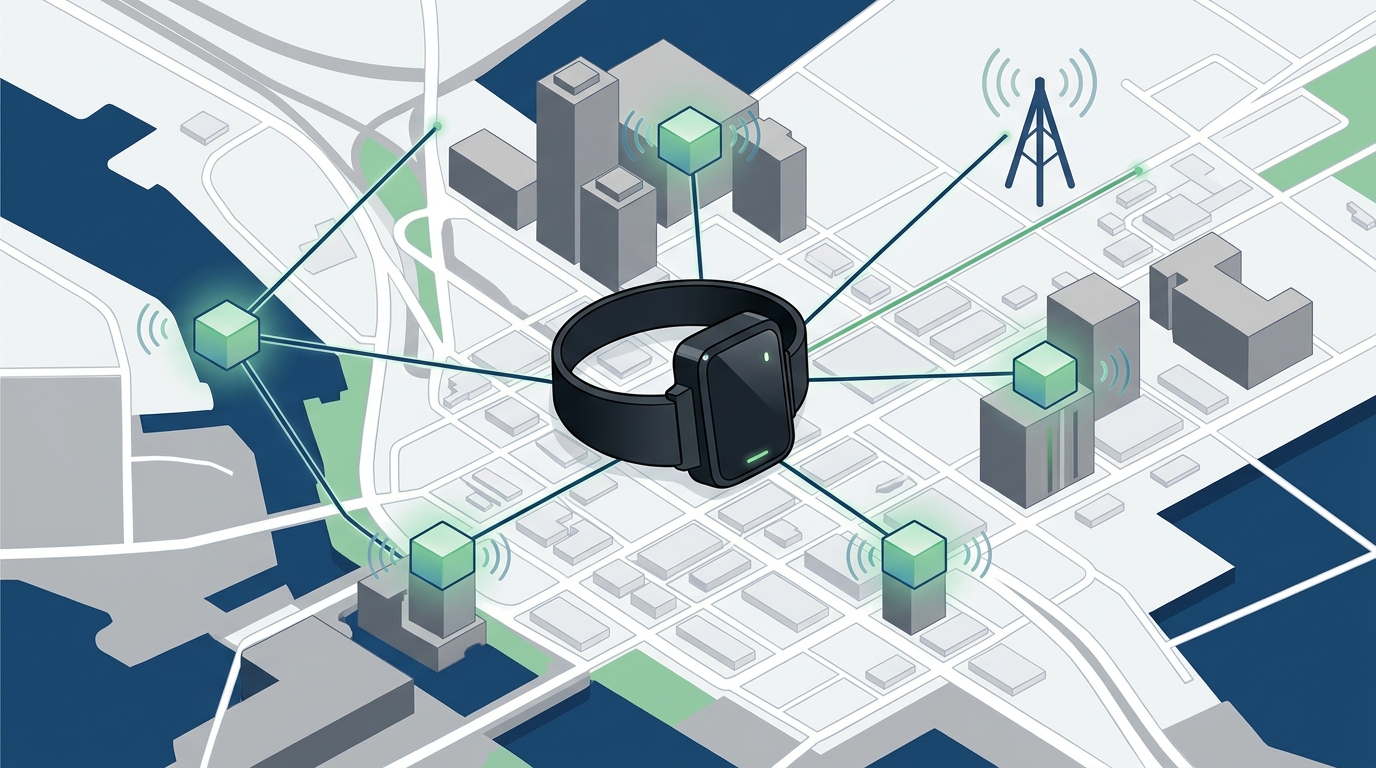
Before selecting a vendor, you must ask specific technical questions. Do not accept vague answers about "advanced tracking." You need to know exactly how the device handles signal loss. Ask the provider to demonstrate how their software visualizes a client's movement when they are indoors or in a GPS-impaired zone.
Signal Handling
Ask how the device prioritizes signals. Does it use Wi-Fi for indoor positioning? Does it have a power-saving beacon option to extend battery life? These details determine the operational efficiency of your program. A device that drains its battery quickly will require more frequent maintenance and increase administrative burden.
Software Integration
Ask about the software platform. Does it integrate with your existing case management systems? Can it provide real-time alerts for zone breaches? The hardware is only as good as the software that processes its data. Ensure the platform offers clear visualization tools, such as mapping reports, to help officers make informed decisions quickly.
Verifying Technical Claims
Marketing materials often exaggerate the capabilities of electronic monitoring devices. You must verify these claims through independent testing or case studies. Look for evidence that the device has been tested in real-world urban environments. A claim of "complete community coverage" should be backed by data showing successful tracking in dense urban centers.
Third Party Validation
Check for third party audits or certifications. While the industry is evolving, reputable manufacturers provide transparent data on their device's performance. You can also review research from academic institutions that study the efficacy of surveillance technologies. For instance, a report from George Washington University highlights the importance of understanding the actual impacts of these devices on individuals.
Vendor Transparency
A trustworthy vendor will be transparent about their technology's limitations. They should be able to explain how their Wi-Fi integration works and what happens when a signal is lost. If a vendor cannot provide specific details about their signal handling, it is a red flag. You want a partner who is honest about the technology's strengths and weaknesses.
The Implementation Process
Implementing a Wi-Fi enabled monitoring program involves several distinct steps. First, the device is fitted to the client. This is a quick process that should be done in a professional setting. Next, the device is activated and paired with the monitoring software. The client is then given instructions on how to charge the device and what to expect during the monitoring period.
Device Activation
Once activated, the device begins transmitting data. It uses its built-in sensors to determine its location. In an urban environment, it will likely use a combination of GPS and Wi-Fi. The data is sent to the cloud-based platform in real time. This allows monitoring officers to see the client's location on a map immediately.
Ongoing Monitoring
After the initial setup, the monitoring is continuous. The device sends regular pings to the server. If the client enters an exclusion zone, the system generates an alert. The officer can then review the data and take appropriate action. The process is designed to be seamless for the client, requiring minimal interaction beyond charging the device.
Cost Drivers and Budgeting
The cost of electronic monitoring is driven by several factors. The primary cost is the hardware itself. However, the ongoing cost of data transmission and software licensing is often higher. Wi-Fi enabled devices may have slightly higher hardware costs due to the additional sensors, but they can save money in the long run by reducing false alerts and maintenance needs.
Hardware vs. Software
Hardware costs are a one-time expense per device, though they may need to be replaced over time. Software costs are usually a monthly fee per client. This fee covers the data transmission, cloud storage, and access to the monitoring platform. When budgeting, consider the total cost of ownership, which includes both hardware and software.
Operational Savings
While the upfront cost may be higher, Wi-Fi enabled monitors can reduce operational costs. They require less frequent maintenance than GPS-only devices, which may need to be swapped out more often due to battery issues. They also reduce the need for in-person check-ins, saving staff time. These savings can offset the higher hardware costs over the life of the program.
Common Mistakes to Avoid
One of the most common mistakes is assuming that GPS is enough. In a city like Dallas, GPS signals can be unreliable. If you do not use a Wi-Fi enabled device, you may experience gaps in tracking data. This can lead to false violations, which can erode trust in the program and lead to legal challenges.
Ignoring Signal Interference
Another mistake is not testing the device in the specific environment where it will be used. If you are monitoring clients in a dense urban area, you must ensure the device can handle signal interference. Conduct a pilot test in a few key locations to verify that the device is working as expected. This will help you identify any potential issues before rolling out the program to a larger group.
Lack of Training
Finally, failing to train your staff on the new technology is a major oversight. Officers need to understand how to interpret the data and respond to alerts. Without proper training, they may miss important details or misinterpret the data. Invest in comprehensive training for your staff to ensure they are using the technology effectively.
Wi-Fi vs. GPS Only
Wi-Fi enabled monitors offer several advantages over GPS-only devices. The most significant advantage is reliability in urban environments. GPS signals can be blocked by buildings, trees, and other obstacles. Wi-Fi signals, on the other hand, are often stronger indoors and in dense urban areas. This makes Wi-Fi enabled monitors a better choice for monitoring clients in cities like Dallas.
| Feature | GPS Only | Wi-Fi Enabled |
|---|---|---|
| Urban Reliability | Low | High |
| Indoor Tracking | Poor | Good |
| Battery Life | Variable | Extended with Beacon |
| Cost | Lower | Higher |
Accuracy
Wi-Fi enabled monitors generally offer higher accuracy in urban environments. They can triangulate their position using multiple Wi-Fi access points. This provides a more precise location than GPS alone, which can have a margin of error of several meters. This level of accuracy is crucial for enforcing exclusion zones and curfews.
Cost Considerations
As noted in the table, Wi-Fi enabled monitors are more expensive than GPS-only devices. However, the cost difference is often justified by the improved reliability and accuracy. When you factor in the cost of false alerts and maintenance, Wi-Fi enabled monitors can be more cost-effective in the long run.
Urban vs. Rural Scenarios
The choice of monitoring technology depends on the specific environment. In a rural area, GPS is usually sufficient. There are fewer obstacles to block the signal, and the open sky provides a clear line of sight to satellites. In an urban area, however, GPS is often unreliable. This is where Wi-Fi enabled monitors shine. They can provide continuous tracking even in dense city centers.
Dallas Urban Core
In the Dallas urban core, buildings are tall and close together. This creates a "canyon" effect that can block GPS signals. Wi-Fi enabled monitors can use the many Wi-Fi access points in the area to determine their location. This makes them ideal for monitoring clients in downtown Dallas or other dense urban neighborhoods.
Suburban and Rural
In suburban and rural areas, GPS is usually the primary signal source. However, Wi-Fi enabled monitors can still be useful. They can use Wi-Fi to verify their location when they are indoors or in a GPS-impaired zone. This provides an extra layer of security and ensures that the monitoring is continuous.
Legal Rules and Protections
Electronic monitoring is subject to legal rules and protections. The Fourth Amendment of the U.S. Constitution protects individuals from unreasonable searches and seizures. This means that the use of electronic monitoring must be reasonable and proportional to the offense. Courts have generally upheld the use of electronic monitoring as a less restrictive alternative to incarceration, but they have also recognized that it can raise privacy concerns.
Privacy Concerns
Research has shown that electronic monitoring can have significant impacts on individuals' lives. A study by Media Justice found that ankle monitors can tether wearers to the carceral system, mainly because of technical violations. This highlights the importance of using reliable technology that minimizes false alerts. It also underscores the need for clear policies and procedures for handling violations.
Due Process
Individuals subject to electronic monitoring have the right to due process. This means they must be given notice of the monitoring and an opportunity to be heard if a violation is alleged. They also have the right to challenge the accuracy of the data. Courts have generally held that the data from electronic monitoring devices is admissible in court, but it must be reliable. This is why it is important to use high-quality devices that provide accurate data.
Dallas Specifics
Dallas is a large, diverse city with a mix of urban, suburban, and rural areas. This makes it a challenging environment for electronic monitoring. The city has a high density of buildings, which can block GPS signals. It also has a large number of Wi-Fi access points, which can be used to improve tracking accuracy. These factors make Wi-Fi enabled monitors a good choice for monitoring clients in Dallas.
Infrastructure
Dallas has a robust telecommunications infrastructure. This means that there are many cellular and Wi-Fi networks available. This makes it easier for Wi-Fi enabled monitors to connect and transmit data. The city also has a strong public safety sector, which is committed to using technology to improve community safety. This makes it a good place to implement a Wi-Fi enabled monitoring program.
Community Partnerships
Implementing a monitoring program in Dallas requires partnerships with local stakeholders. This includes law enforcement, courts, and community organizations. These partners can help you identify the best locations for monitoring and develop policies that are fair and effective. They can also help you address any concerns that the community may have about the use of electronic monitoring.
Timing Your Deployment
The timing of your deployment is critical. You should deploy the program when you have the resources to support it. This includes staff, training, and budget. If you deploy the program too quickly, you may not have the resources to support it effectively. This can lead to problems with the program and erode trust in the technology.
Pilot Program
A pilot program is a good way to test the technology before rolling it out to a larger group. This allows you to identify any issues and make adjustments before the full deployment. It also allows you to gather data on the program's effectiveness. This data can be used to make informed decisions about the future of the program.
Phased Rollout
A phased rollout is another good strategy. This involves deploying the program in stages, starting with a small group of clients and gradually expanding to a larger group. This allows you to manage the workload and ensure that the program is running smoothly. It also allows you to gather feedback from clients and staff and make adjustments as needed.
Long Term Outcomes
The long term outcomes of a Wi-Fi enabled monitoring program depend on several factors. These include the quality of the technology, the policies and procedures in place, and the support provided to clients. A well-designed program can improve compliance, reduce recidivism, and enhance public safety. It can also reduce the burden on the justice system by providing a less restrictive alternative to incarceration.
Compliance
Wi-Fi enabled monitors can improve compliance by providing continuous tracking. This makes it harder for clients to violate their conditions of release. It also provides officers with real time data that they can use to intervene before a violation occurs. This can help to prevent reoffending and keep the community safe.
Recidivism
Research has shown that electronic monitoring can reduce recidivism. However, the results are mixed. Some studies have found that electronic monitoring has no effect on recidivism, while others have found that it can reduce it. The key is to use the technology as part of a comprehensive program that includes support services and supervision. This can help to address the underlying causes of reoffending and improve long term outcomes. according to The Crime Report
Key Takeaways
- Wi-Fi enabled monitors are essential for reliable tracking in urban environments like Dallas.
- Look for devices with multi-modal connectivity (GPS, Wi-Fi, cellular) to ensure continuous coverage.
- Verify technical claims through independent testing and case studies.
- Implement the program in phases to manage workload and ensure effectiveness.
- Train your staff thoroughly on how to use the technology and interpret the data.
- Consider the total cost of ownership, including hardware and software.
- Use the technology as part of a comprehensive program that includes support services.
Frequently Asked Questions
Do Wi-Fi enabled ankle monitors work indoors?
Yes, Wi-Fi enabled monitors can work indoors. They use Wi-Fi signals to determine their location, which is often more reliable than GPS indoors. This makes them ideal for monitoring clients in homes or other indoor spaces.
How accurate are Wi-Fi enabled monitors?
Wi-Fi enabled monitors are generally more accurate than GPS-only monitors in urban environments. They can triangulate their position using multiple Wi-Fi access points, which provides a more precise location.
Are Wi-Fi enabled monitors more expensive than GPS-only monitors?
Yes, Wi-Fi enabled monitors are usually more expensive than GPS-only monitors. However, the cost difference is often justified by the improved reliability and accuracy.
Can Wi-Fi enabled monitors be tampered with?
Like all electronic devices, Wi-Fi enabled monitors can be tampered with. However, they are designed with tamper detection features that alert the monitoring officer if the device is removed or damaged.
How long does it take to implement a Wi-Fi enabled monitoring program?
The time it takes to implement a program depends on the size of the program and the complexity of the technology. A small pilot program can be implemented in a few weeks, while a large scale program may take several months.
What are the legal implications of using Wi-Fi enabled monitors?
The use of Wi-Fi enabled monitors is subject to legal rules and protections. The Fourth Amendment protects individuals from unreasonable searches and seizures, so the use of the technology must be reasonable and proportional to the offense.