

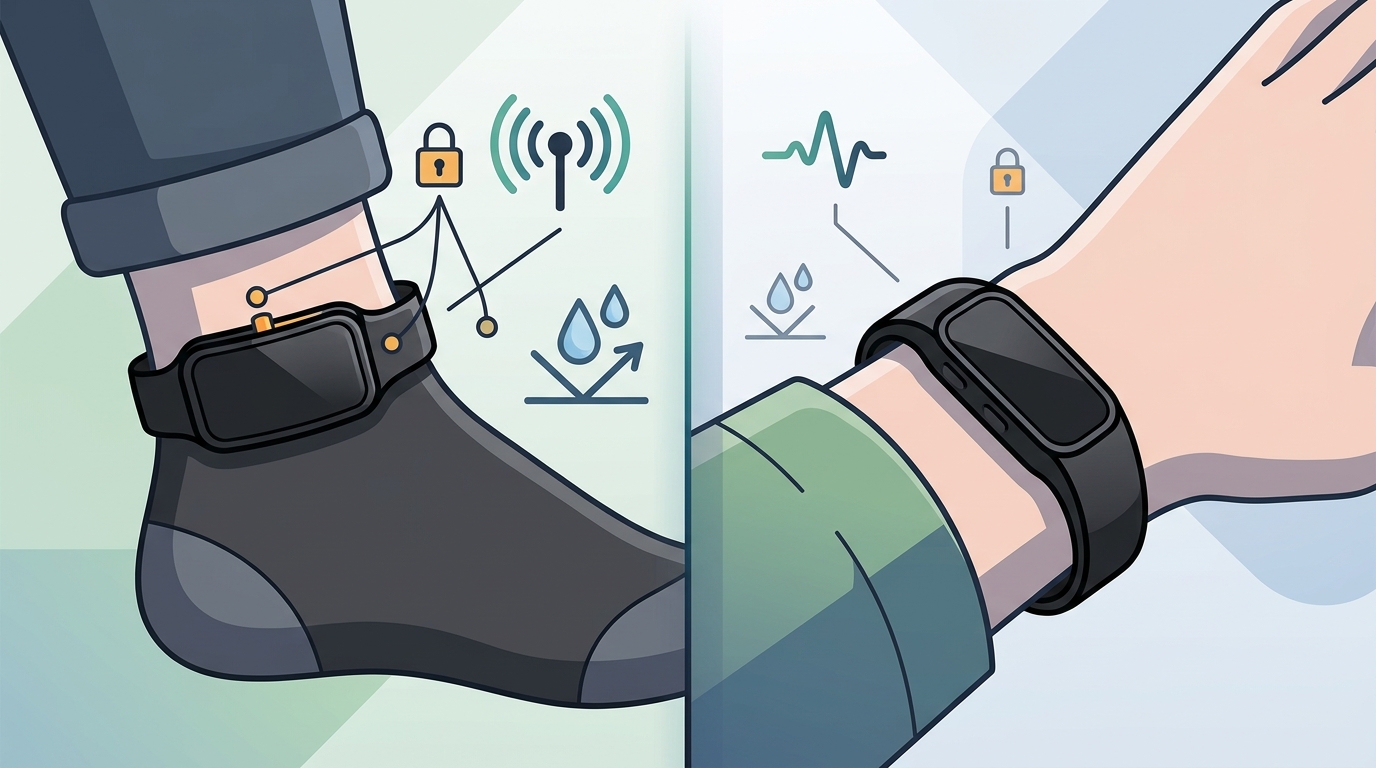
For community supervision, GPS ankle bracelets are generally more reliable than wristbands due to superior tamper resistance and signal consistency. JSG Monitoring provides both form factors, allowing agencies to match the device to the specific risk profile of the supervisee. This guide compares the reliability of ankle and wrist-worn devices across five critical dimensions: tamper resistance, signal integrity, water durability, and operational vulnerability. We analyze how each technology performs in real-world conditions to help courts and monitoring providers make informed equipment decisions.
Ankle Bracelet Reliability
Ankle-worn GPS monitoring is the industry standard for high-risk offender supervision. The primary advantage of this form factor is its physical placement. The ankle is a less accessible location for the wearer to manipulate the device compared to the wrist. This physical barrier significantly reduces the frequency of intentional tampering attempts. JSG Monitoring offers robust ankle solutions like the BI LOC8 XT, which is designed for long-term use and operational efficiency. The device features a low-profile, form-fitting design that ensures comfort while maintaining robust functionality. Because the device is secured to the body with a tamper-resistant strap, it provides a continuous and reliable data stream. This consistency is critical for agencies that require 24/7 tracking without frequent manual interventions. The reliability of ankle bracelets stems from their durability and the difficulty of removing them without triggering alerts. For courts and law enforcement, this means fewer false alarms and more actionable data. The Omnilink GPS further enhances this reliability with a cut-free, fiber optic strap that prevents false tamper alerts. This technology reduces administrative burdens by ensuring that only genuine removal attempts trigger notifications. As a result, ankle bracelets remain the most trusted option for ensuring compliance in community corrections programs.
Wristband Vulnerability
Wrist-worn devices, such as the BI VeriWatch, offer a discreet alternative to traditional ankle monitors. However, their reliability is often challenged by their accessibility. The wrist is a highly mobile and accessible body part, making it easier for a supervisee to hide, manipulate, or remove the device. While modern wristbands include biometric facial comparison and liveness detection to confirm identity, the physical vulnerability remains a concern. The device is comparable in size to a consumer smartwatch, which can lead to complacency among some users. This form factor is best suited for lower-risk offenders or those who have earned less intensive supervision. The vulnerability of wristbands is not just about removal but also about signal obstruction. Wrapping the wrist in clothing or keeping the hand in a pocket can degrade GPS and cellular signals. JSG Monitoring addresses this with high-frequency pursuit mode and proximity sensors that prompt biometric check-ins. Despite these features, agencies must weigh the discretion of a wristband against the inherent physical vulnerabilities of the placement. For high-risk cases, the wrist may not provide the same level of security as the ankle. The choice between the two often depends on the specific risk assessment of the individual. Understanding these vulnerabilities helps monitoring companies tailor their supervision strategies effectively.
Tamper Resistance Design
Tamper resistance is the defining feature of reliable electronic monitoring. A reliable device must detect and report any attempt to remove or disable it. Ankle bracelets typically use fiber optic or cut-resistant straps that trigger immediate alerts when severed. The Omnilink GPS utilizes a cut-free, fiber optic strap that prevents false tamper alerts, a common issue with older metal strap designs. This precision is crucial for maintaining trust in the monitoring system. Wristbands, on the other hand, rely on a combination of physical sensors and biometric verification. The BI VeriWatch uses a proximity sensor to detect device removal and prompts a biometric check-in. If the device is removed, the system requires the user to verify their identity using facial recognition. This multi-layered approach adds a significant barrier to tampering. However, the reliance on user interaction for verification can be a point of failure if the user refuses to comply. Ankle bracelets, by contrast, do not require user interaction to confirm removal. The physical break of the strap is the primary indicator. This passive detection method is often more reliable in high-stakes environments. JSG Monitoring emphasizes robust tamper detection features in all its products to ensure immediate alerts in case of tampering attempts. The design philosophy focuses on minimizing false positives while maximizing the detection of genuine violations. This balance is essential for the operational efficiency of monitoring agencies.
Signal Consistency
Signal consistency determines the accuracy of location data. GPS, Wi-Fi, and cellular technologies all play a role in maintaining a reliable connection. Ankle bracelets benefit from a more stable position relative to the body, which can improve signal reception. The BI LOC8 XT uses GPS, Wi-Fi, and cellular technology to ensure complete community coverage and accurate location tracking, even during GPS interference. The integration of multiple signal sources provides redundancy. If one signal is weak, the others can compensate. Wristbands face more challenges due to the constant movement of the arm. The BI VeriWatch uses GPS and Wi-Fi to increase location accuracy and preserve battery life. However, the movement of the wrist can cause signal fluctuations. To mitigate this, the device runs on a secure, custom operating system designed for the rigors of community supervision. This software optimizes signal acquisition and data transmission. For agencies, signal consistency is a key metric for evaluating device reliability. A device that drops signals frequently requires more manual intervention and can lead to gaps in monitoring data. JSG Monitoring’s products are designed to minimize these gaps through advanced connectivity features. The use of LTE cellular connectivity in devices like the BI SL3 ensures reliable data transmission even in remote locations. This level of connectivity is essential for maintaining a continuous and accurate record of the supervisee’s movements.
Water Exposure Durability
Durability in wet conditions is a critical factor for any wearable monitoring device. Offenders and supervisees are exposed to water daily, whether through bathing, swimming, or weather. A reliable device must withstand these conditions without compromising its functionality. The Omnilink GPS features a waterproof and submersible design, ensuring it performs under any conditions. This durability is essential for maintaining the integrity of the monitoring data. Water exposure can degrade electronic components if not properly sealed. JSG Monitoring’s products are engineered to meet high standards of water resistance. The Buddi Insight smart tag is also lightweight, waterproof, and tamper-proof, providing real-time location tracking. This level of durability ensures that the device remains functional and reliable over its entire lifecycle. For wristbands, water resistance is equally important. The BI VeriWatch is designed to withstand daily use, including exposure to water. The device’s cordless charging system and robust build quality contribute to its longevity. Agencies must consider the long-term durability of the device when making procurement decisions. A device that fails frequently due to water damage increases operational costs and reduces reliability. JSG Monitoring focuses on providing durable equipment that can handle the rigors of community supervision. This commitment to durability ensures that agencies can rely on their monitoring tools without frequent replacements or repairs.
Comparison Table
| Feature | Ankle Bracelet (e.g., BI LOC8 XT) | Wristband (e.g., BI VeriWatch) |
|---|---|---|
| Physical Placement | Ankle (Less accessible) | Wrist (Highly accessible) |
| Tamper Detection | Passive (Strap break) | Active (Biometric check-in) |
| Signal Stability | High (Stable position) | Variable (Arm movement) |
| Discretion | Low (Visible) | High (Smartwatch-like) |
| Water Durability | Waterproof/Submersible | Water Resistant |
| Best For | High-risk offenders | Lower-risk offenders |
Key Takeaways
- Ankle bracelets are generally more reliable for high-risk supervision due to superior tamper resistance.
- Wristbands offer greater discretion but are more vulnerable to physical manipulation.
- Tamper resistance in ankle devices is often passive, relying on strap integrity.
- Wristbands use active biometric verification to confirm identity and device presence.
- Signal consistency is higher in ankle devices due to a more stable physical position.
- Water durability is a critical feature for both form factors, ensuring long-term reliability.
- JSG Monitoring provides both options, allowing agencies to match the device to the risk profile.
- The choice between ankle and wrist devices should be based on individual risk assessments.
Frequently Asked Questions
Are ankle bracelets more reliable than wristbands?
Generally, yes. Ankle bracelets are considered more reliable for high-risk supervision because they are harder to remove and manipulate. The physical placement on the ankle provides a natural barrier against tampering. Wristbands, while discreet, are more accessible and can be more easily hidden or removed.
How do wristbands prevent tampering?
Wristbands like the BI VeriWatch use biometric facial comparison and liveness detection. If the device is removed, it prompts the user to verify their identity. This active verification process adds a layer of security that passive strap detection does not provide.
What is the advantage of a wrist-worn device?
The primary advantage is discretion. Wrist-worn devices are comparable in size to consumer smartwatches, making them less conspicuous. This can improve compliance and reduce the stigma associated with wearing a monitoring device. It is ideal for lower-risk offenders or those in later stages of supervision.
Do ankle bracelets work in water?
Yes. Devices like the Omnilink GPS are designed to be waterproof and submersible. This ensures that the device continues to function and transmit data even when the wearer is bathing or swimming. Water resistance is a standard feature in modern electronic monitoring equipment.
How does signal consistency differ between the two?
Ankle bracelets typically offer more consistent signal reception because the ankle is a more stable position. Wristbands may experience signal fluctuations due to the constant movement of the arm. However, modern devices use multiple technologies (GPS, Wi-Fi, cellular) to mitigate these issues.
Can I switch between ankle and wrist devices?
Yes. Many monitoring programs allow for a transition from ankle to wrist devices as the offender’s risk level decreases. JSG Monitoring supports this flexibility by offering a comprehensive range of products that can be integrated into a single monitoring platform.
What role does software play in reliability?
Software is crucial for interpreting data and managing alerts. Devices like the BI VeriWatch run on a secure, custom operating system designed for community supervision. This software ensures that data is processed accurately and that alerts are actionable. It also supports over-the-air updates, keeping the device current without physical servicing.
How does JSG Monitoring support agencies?
JSG Monitoring provides not just equipment, but also training, operational guidance, and expert support. Our team helps agencies choose the right devices for their specific needs and ensures that the monitoring program runs smoothly. We are committed to building stronger, smarter monitoring solutions through true partnership.
Conclusion
Choosing between GPS bracelets and wristbands for supervision depends on the specific needs of the monitoring program. Ankle bracelets offer superior tamper resistance and signal consistency, making them ideal for high-risk cases. Wristbands provide greater discretion and are well-suited for lower-risk offenders or those in later stages of supervision. JSG Monitoring offers a comprehensive range of both ankle and wrist-worn devices, allowing agencies to tailor their solutions to the unique needs of their partners. By understanding the reliability factors of each form factor, courts and monitoring companies can make informed decisions that enhance public safety and support accountability. To explore the full range of electronic monitoring solutions, visit the JSG Monitoring products page or for guidance on the right equipment for your program.