
What Makes a Good Electronic Monitoring System for Dallas Community Corrections?
A good electronic monitoring system for Dallas community corrections programs combines reliable multi-source location tracking, robust tamper detection, and seamless software integration. It must operate effectively in dense urban environments while providing real-time alerts to supervising officers. JSG Monitoring designs these solutions to support accountability and public safety in complex metropolitan areas.
Reliable Location Accuracy in Urban Environments
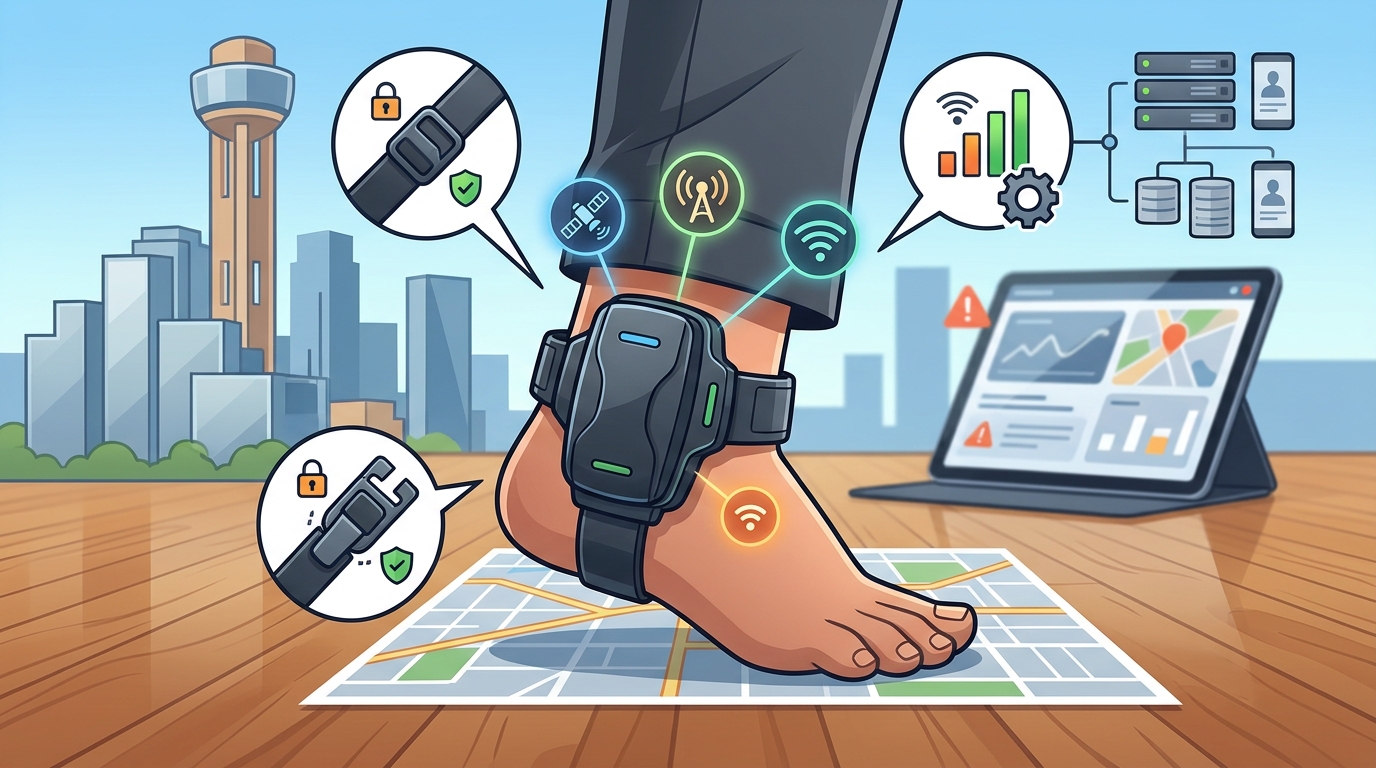
Effective monitoring in a city like Dallas requires precise location data that remains accurate in dense urban canyons and indoor spaces. Standard GPS signals often degrade in these environments, leading to false alerts or tracking gaps. A superior system utilizes a hybrid approach, combining GPS with Wi-Fi and cellular triangulation to maintain continuous coverage. This multi-source verification ensures that officers receive reliable data regardless of the offender's specific location within the city limits.
The Role of Multi-Source Verification
Multi-source verification is the process of cross-referencing location data from multiple technologies to confirm an offender's position. By integrating Wi-Fi beacon detection with cellular tower data, the system can pinpoint locations even when satellite signals are obstructed. This capability is critical for enforcing curfews and exclusion zones in metropolitan areas. It reduces the administrative burden on officers who would otherwise have to manually verify ambiguous location pings.
Discreet Hardware Design and Compliance
Compliance rates improve significantly when monitoring devices are discreet and comfortable for long-term wear. Bulky or conspicuous hardware often leads to non-compliance, tampering, or social stigma that hinders rehabilitation. Modern systems offer low-profile ankle bracelets and wrist-worn devices that resemble consumer electronics. This design philosophy supports dignity and reduces the likelihood of device removal, ensuring continuous data collection for the duration of the supervision period.
Comfort and Durability
Durability is a key component of a good monitoring system, as devices must withstand daily wear and tear. Waterproof and tamper-resistant designs prevent accidental damage and intentional interference. Comfort features, such as lightweight materials and secure straps, encourage consistent use. When offenders feel comfortable wearing the device, they are more likely to adhere to program requirements, leading to better overall outcomes for the corrections program.
Real-Time Alerts and Software Integration
Hardware alone is insufficient without a robust software platform that processes data and delivers actionable insights. A good system provides real-time alerts for zone breaches, tampering, or low battery levels directly to supervising officers. This immediacy allows for rapid intervention, which is essential for maintaining public safety. The software must integrate seamlessly with existing case management systems to avoid data silos and streamline workflow for court and probation staff.
Cloud-Based Accessibility
Cloud-based platforms allow officers to access monitoring data from any location, enhancing flexibility and responsiveness. This accessibility is particularly important for agencies managing large caseloads across different jurisdictions. Real-time dashboards provide a clear overview of all monitored individuals, highlighting those who require immediate attention. This efficiency helps agencies allocate resources more effectively, focusing on high-risk cases while automating routine compliance checks.
Scalability and Program Flexibility
Community corrections programs often need to adjust monitoring intensity based on an offender's risk level and progress. A scalable system allows for easy transitions between different monitoring modes, such as switching from continuous tracking to curfew-only monitoring. This flexibility supports a graduated approach to supervision, rewarding compliance with reduced restrictions. It also allows programs to expand or contract their monitored population without significant infrastructure changes.
Customizable Zones and Rules
Customizable zones and rules are essential for tailoring monitoring to specific court orders. Officers can define exclusion zones, such as areas near victims or schools, and inclusion zones, such as approved workplaces or treatment centers. The system automatically generates alerts when these boundaries are crossed. This precision ensures that monitoring aligns with the specific conditions of each case, enhancing the legal defensibility of the program.
Support and Partnership for Implementation
Successful implementation of electronic monitoring requires more than just technology; it requires a dedicated partnership with a reliable provider. JSG Monitoring offers comprehensive support, including training, troubleshooting, and 24/7 technical assistance. This partnership model ensures that agencies have the resources they need to operate the system effectively from day one. Ongoing support helps address any technical issues promptly, minimizing downtime and maintaining program integrity.
Training and Best Practices
Training is a critical component of a good monitoring system, ensuring that staff understand how to interpret data and respond to alerts. JSG Monitoring provides a robust training library and expert-led guidance to help agencies adopt best practices. This knowledge transfer empowers officers to make informed decisions based on the data provided by the system. It also helps agencies develop standardized procedures for handling violations, ensuring consistency and fairness across the program. according to What Makes a
Key Takeaways
- Reliable location accuracy requires multi-source verification using GPS, Wi-Fi, and cellular data.
- Discreet, comfortable hardware design improves compliance and reduces tampering.
- Real-time software alerts enable rapid intervention and enhance public safety.
- Cloud-based platforms provide flexibility and streamline workflow for officers.
- Scalability allows programs to adjust monitoring intensity based on risk levels.
- Customizable zones ensure monitoring aligns with specific court orders.
- Dedicated provider support and training are essential for successful implementation.
Frequently Asked Questions
How does multi-source tracking improve accuracy in Dallas?
Multi-source tracking combines GPS, Wi-Fi, and cellular data to verify location, ensuring accuracy even in dense urban areas where GPS signals may be weak.
What is the benefit of discreet monitoring devices?
Discreet devices reduce social stigma and discomfort, leading to higher compliance rates and lower instances of tampering or removal.
Can monitoring systems integrate with existing case management software?
Yes, modern systems are designed to integrate seamlessly with existing case management platforms, allowing for efficient data sharing and workflow automation.
How do real-time alerts help officers?
Real-time alerts notify officers immediately of zone breaches or tampering, enabling rapid intervention to maintain public safety.
What kind of support does JSG Monitoring provide?
JSG Monitoring offers comprehensive support, including training, troubleshooting, and 24/7 technical assistance to ensure smooth operation.
Is the system scalable for large caseloads?
Yes, the system is scalable, allowing agencies to easily adjust the number of monitored individuals and monitoring intensity as needed.
How are customizable zones used in monitoring?
Customizable zones allow officers to define specific areas where offenders are allowed or prohibited, with automatic alerts for any breaches.