

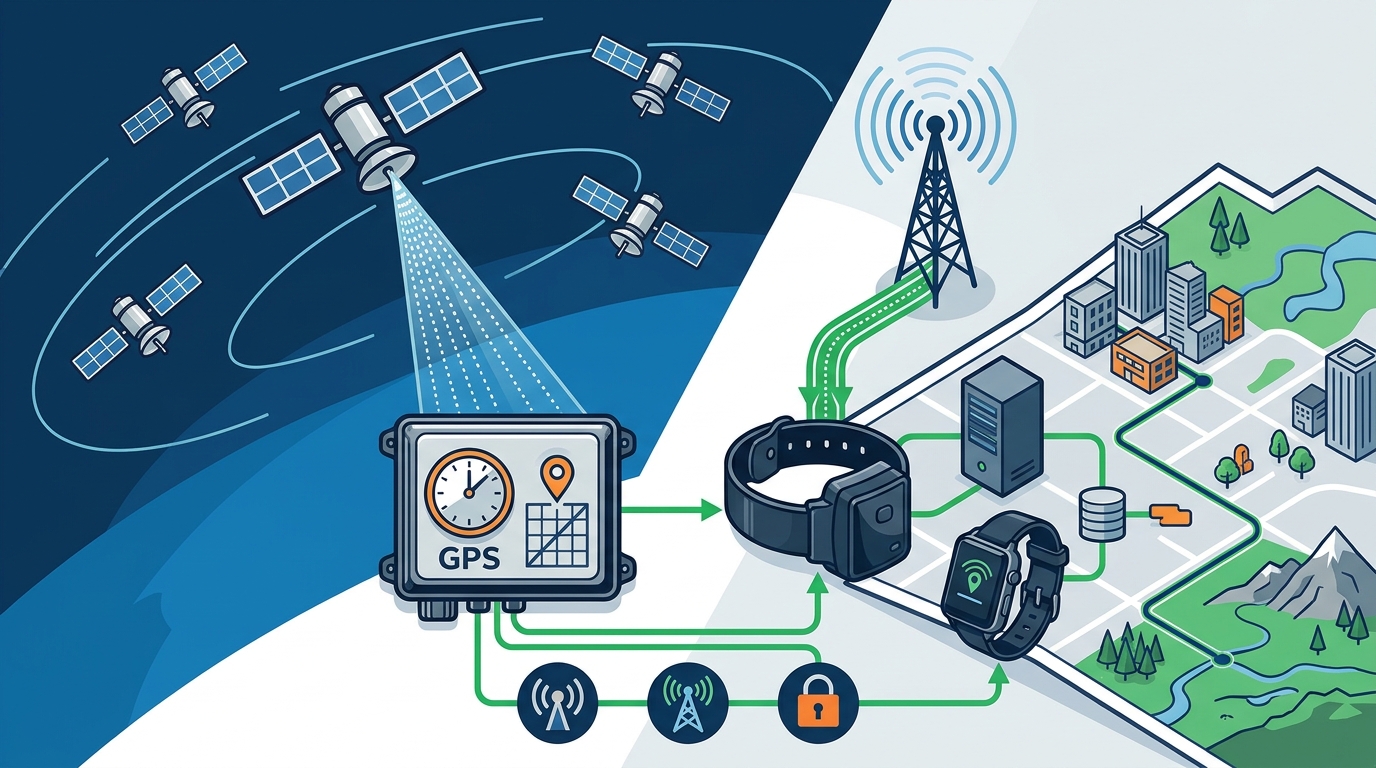
Modern electronic monitoring devices combine GPS satellites and cellular networks to provide real-time location data. GPS determines precise coordinates, while cellular technology transmits that data to monitoring centers. This dual-system approach ensures reliable tracking even in areas with poor satellite visibility. JSG Monitoring integrates these technologies into durable hardware designed for continuous community supervision.
The Role of GPS in Location Accuracy
Global Positioning System (GPS) technology is a satellite-based navigation system that provides location and time information. In electronic monitoring, GPS receivers calculate a device's position by measuring the distance to multiple satellites. This process, known as trilateration, allows for high-precision tracking. Modern devices often use assisted GPS to speed up signal acquisition in urban canyons or indoor environments.
The accuracy of GPS is critical for enforcing curfews and exclusion zones. A deviation of even a few meters can trigger a false alert or miss a violation. To address this, advanced devices incorporate Wi-Fi and cellular triangulation. These methods supplement satellite data to refine location accuracy when GPS signals are weak. This hybrid approach ensures that monitoring agencies receive consistent and reliable data.
Cellular Networks as the Data Backbone
Cellular tracking is the process of transmitting location data from a wearable device to a remote server via mobile networks. While GPS calculates the position, the cellular module acts as the communication link. This connection allows for real-time data transmission, ensuring that monitoring officers receive updates immediately. The device sends packets of data containing latitude, longitude, and timestamp information.
The reliability of this transmission depends on network coverage. Devices typically support multiple cellular bands to maintain connectivity across different carriers and regions. In areas with limited coverage, devices may buffer data and transmit it once a connection is re-established. This ensures that no data is lost, even if the signal drops temporarily. The integration of LTE technology further enhances data throughput and battery efficiency.
Hardware Design for Continuous Monitoring
Electronic monitoring hardware is designed to withstand daily wear and environmental stress. Devices are often waterproof and tamper-resistant to prevent removal or damage. The physical design must balance durability with user comfort, as these devices are worn for extended periods. JSG Monitoring offers products like the BI LOC8 XT, which features a low-profile design for discretion.
Battery life is a critical factor in continuous monitoring. Modern devices utilize power-saving modes and efficient charging systems to extend operational time. Some devices offer rapid charging capabilities, allowing for quick swaps during check-ins. The hardware must also support over-the-air updates to improve functionality without physical servicing. This ensures that the device remains secure and up-to-date with the latest security protocols.
Software Integration and Real-Time Alerts
The data collected by GPS and cellular modules is processed by specialized software platforms. These platforms visualize location data on digital maps and generate alerts for violations. Real-time alerts notify monitoring officers when a device enters an exclusion zone or leaves a required area. The software also tracks device health, including battery level and signal strength.
Integration with case management systems allows for seamless workflow. Officers can view location history, generate reports, and manage client interactions within a single interface. This reduces administrative burden and improves response times. The Omnilink GPS integrates with FocalPoint software, providing a robust solution for real-time monitoring. This integration ensures that data is actionable and easily accessible to authorized personnel.
Challenges in Urban and Rural Environments
Tracking accuracy can be affected by environmental factors. In dense urban areas, buildings can block GPS signals, leading to multipath errors. Cellular triangulation helps mitigate this issue by using nearby cell towers to refine location. In rural areas, satellite visibility is often better, but cellular coverage may be sparse. Devices must be designed to handle these varying conditions effectively.
Power consumption is another challenge in remote areas. Devices may need to conserve battery life when signal strength is low. Adaptive power management systems adjust transmission frequency based on network conditions. This ensures that the device remains operational for as long as possible. JSG Monitoring focuses on providing reliable technology that performs consistently across diverse environments.
Key Takeaways
- GPS provides precise location data through satellite trilateration.
- Cellular networks transmit this data to monitoring centers in real-time.
- Hybrid systems using Wi-Fi and cellular triangulation improve accuracy in challenging environments.
- Durable, tamper-resistant hardware ensures continuous and reliable monitoring.
- Software platforms integrate location data with case management for efficient oversight.
- Adaptive power management extends battery life in areas with varying network coverage.
Frequently Asked Questions
How accurate is GPS tracking in electronic monitoring devices?
What happens if a device loses cellular signal?
If a device loses cellular signal, it buffers location data locally. Once a connection is re-established, the device transmits the stored data to the monitoring center. This ensures that no data is lost during temporary outages.
Can electronic monitoring devices be used indoors?
Yes, many devices use Wi-Fi and cellular triangulation to track locations indoors. GPS signals are often weak indoors, but these alternative methods provide reliable location data. This allows for effective monitoring in homes and other indoor spaces.
How do tamper-resistant features work?
Tamper-resistant features include secure straps and sensors that detect removal or damage. If tampering is detected, the device sends an immediate alert to the monitoring center. This ensures that any attempt to bypass monitoring is quickly identified.
What is the role of software in electronic monitoring?
Software platforms process and visualize location data, generating alerts for violations. They also integrate with case management systems to streamline workflows. This allows officers to monitor compliance efficiently and respond to issues promptly.
How long do electronic monitoring devices last on a single charge?
Battery life varies by device and usage patterns. Many modern devices offer several days of continuous monitoring on a single charge. Rapid charging capabilities allow for quick swaps during check-ins, ensuring uninterrupted monitoring.
Conclusion
Understanding the mechanics of GPS and cellular tracking is essential for effective electronic monitoring. These technologies work together to provide reliable, real-time location data. JSG Monitoring offers a range of devices that leverage these technologies to support community supervision programs. To explore how these solutions can enhance your monitoring capabilities, for a consultation.