

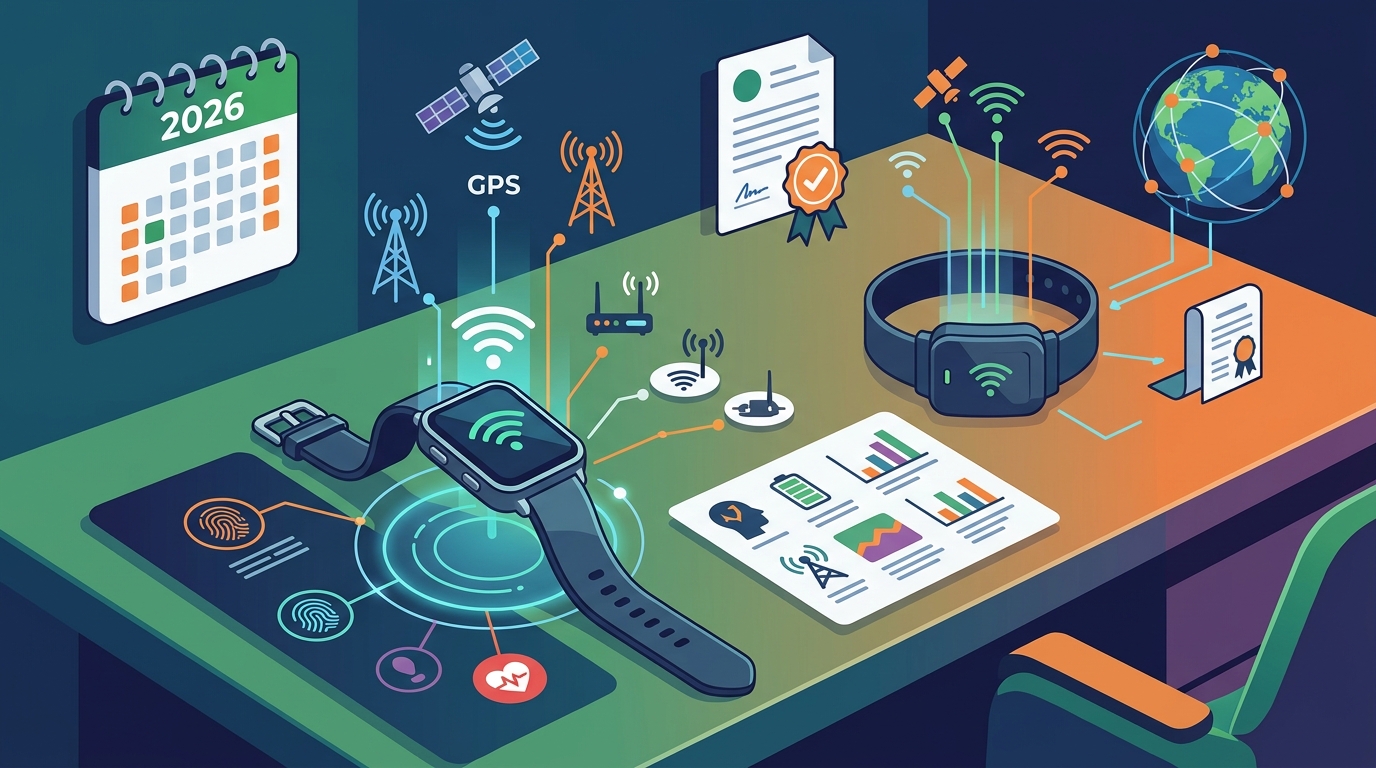
Wrist-worn GPS devices provide real-time monitoring comparable to ankle-worn technology by utilizing advanced cellular and Wi-Fi triangulation, though they differ in tamper resistance and federal eligibility. This guide explores how modern wrist-worn hardware, such as the BI VeriWatch, bridges the gap between discretion and strict compliance. We examine the specific technical capabilities, biometric integrations, and regulatory frameworks that define the current landscape of electronic monitoring in 2026.
The Evolution of Wrist-Worn Monitoring
Electronic monitoring has traditionally relied on bulky ankle bracelets that are highly visible and often stigmatizing. However, the industry is shifting toward discreet, wrist-worn devices that offer similar tracking precision with a form factor comparable to consumer smartwatches. Wearable technology is technology that is made to be worn, including smartwatches and smart glasses, which examine and carry information on the surface of the skin. In the context of corrections, this shift allows for less obtrusive supervision while maintaining the integrity of real-time location data.
The United States Courts have noted that GPS wrist-worn devices are best suited to monitor low-risk, nonviolent defendants, or those with verified medical conditions that prevent the use of ankle-worn technologies. This distinction is critical for agencies looking to diversify their monitoring portfolio. By offering both ankle and wrist-worn options, providers like JSG Monitoring support flexible community correction strategies. The goal is to ensure that the level of supervision matches the risk profile of the individual without compromising public safety.
Tamper Detection Capabilities
Tamper detection is the primary differentiator between traditional ankle monitors and modern wrist-worn devices. Ankle monitors typically use a cut-free, fiber optic strap that triggers an immediate alert if severed. Wrist-worn devices, being smaller and more discreet, require different engineering solutions to prevent removal or bypass.
Proximity and Liveness Sensors
Modern wrist-worn devices, such as the BI VeriWatch, utilize proximity sensors to detect when the device is removed from the wrist. When the device detects a separation, it prompts a biometric check-in. This feature ensures that the device is not simply hidden in a pocket or bag, a common issue with older, less sophisticated wrist-worn units. The integration of liveness detection further confirms that the individual is present and interacting with the device as required.
High-Frequency Pursuit Mode
For high-risk scenarios, wrist-worn devices can enter a high-frequency pursuit mode. This mode increases the rate of location pings to provide near-instantaneous tracking data. While ankle monitors also offer real-time tracking, the wrist-worn form factor allows for a more rapid response to potential violations. The device's secure, custom operating system is designed to control activity and prevent unauthorized access to the hardware, ensuring that the monitoring chain remains unbroken.
Biometric Sensor Integration
Biometric integration has transformed wrist-worn devices from simple trackers into identity-verified monitoring tools. This is particularly important for remote supervision where physical check-ins are not possible. By combining location data with identity verification, agencies can ensure that the person being monitored is the one wearing the device.
Facial Recognition and Identity Verification
Devices like the BI VeriWatch use biometric facial comparison to confirm client identity. This feature is crucial for preventing device sharing, a common loophole in traditional monitoring. The device captures high-resolution images and uses government-grade security software to verify the wearer. This level of bio-confirmation streamlines the monitoring process and reduces the administrative burden on officers who would otherwise need to manually review photos.
Integration with Alcohol Monitoring
While wrist-worn GPS devices focus on location, they can be part of a broader ecosystem that includes alcohol monitoring. For example, the BI SL3 portable alcohol breathalyzer also features facial recognition and GPS. This allows for a unified approach to monitoring where both location and alcohol consumption are verified through biometric means. The integration of these technologies ensures that compliance is not just about where a person is, but also about their behavior and adherence to court-ordered conditions.
Technical Comparison: Wrist vs. Ankle
Understanding the technical differences between wrist-worn and ankle-worn devices is essential for making informed procurement and program design decisions. The following table summarizes the key features of both form factors.
| Feature | Wrist-Worn Devices | Ankle-Worn Devices |
|---|---|---|
| Form Factor | Discreet, smartwatch-sized | Bulky, visible bracelet |
| Tamper Detection | Proximity sensors, biometric check-ins | Cut-free fiber optic strap |
| Identity Verification | Facial recognition, liveness detection | Typically limited to device ID |
| Connectivity | LTE, Wi-Fi, GPS | Cellular, RF, GPS |
| Best Use Case | Low-risk, medical exceptions | High-risk, strict curfews |
The Omnilink GPS ankle monitor, for instance, offers two-way communication and precise indoor location verification using RF and Wi-Fi beacons. This makes it ideal for strict home curfew enforcement. In contrast, wrist-worn devices are better suited for broader community monitoring where discretion is a priority. The choice between the two depends on the specific needs of the monitoring program and the risk assessment of the individual.
Regulatory and Operational Considerations
Regulatory frameworks play a significant role in determining which devices can be used for specific populations. The United States Courts have established guidelines that dictate when wrist-worn devices are permissible. These guidelines ensure that the level of monitoring is appropriate for the offense and the risk level of the individual.
Federal Guidelines and Eligibility
According to federal guidelines, GPS wrist-worn devices may be used only if there is a verified medical condition that does not allow traditional ankle-worn GPS or RF devices to be installed. This restriction is in place because wrist-worn devices do not offer the same level of tamper resistance as ankle-worn devices. Agencies must carefully assess each case to ensure compliance with these regulations. Failure to do so can result in legal challenges and compromised monitoring integrity.
Operational Efficiency and Cost
From an operational standpoint, wrist-worn devices can reduce the administrative burden on monitoring officers. The integration of biometric verification and automated alerts means that officers spend less time on manual checks and more time on high-priority cases. This efficiency can lead to cost savings and improved resource allocation. However, agencies must also consider the initial investment in hardware and software integration. Partnering with a provider like JSG Monitoring can help streamline this process by offering tailored solutions and comprehensive training.
Key Takeaways
- Wrist-worn devices offer real-time monitoring comparable to ankle-worn tech but with a more discreet form factor.
- Tamper detection in wrist-worn devices relies on proximity sensors and biometric check-ins rather than cut-free straps.
- Biometric integration, such as facial recognition, enhances identity verification and prevents device sharing.
- Federal guidelines restrict the use of wrist-worn devices to low-risk individuals or those with medical exceptions.
- Ankle-worn devices remain the standard for high-risk cases and strict curfew enforcement.
- Modern wrist-worn devices support LTE, Wi-Fi, and GPS for comprehensive location tracking.
- Agencies should consider a hybrid approach, using both wrist-worn and ankle-worn devices based on risk assessment. according to Medical Devices that
- Partnering with a specialized provider ensures access to the latest technology and expert support.
Frequently Asked Questions
Are wrist-worn GPS devices as secure as ankle monitors?
Wrist-worn devices are highly secure due to advanced tamper detection and biometric verification. However, they are generally considered less tamper-resistant than ankle monitors, which use cut-free straps. Therefore, wrist-worn devices are typically reserved for lower-risk individuals or those with medical conditions.
Can wrist-worn devices be used for high-risk offenders?
Generally, no. Federal guidelines specify that wrist-worn devices are best suited for low-risk, nonviolent defendants. High-risk offenders are typically required to wear ankle-worn devices that offer more robust tamper resistance and strict curfew enforcement capabilities.
How does biometric verification work on wrist-worn devices?
Biometric verification uses facial recognition and liveness detection to confirm the identity of the wearer. When the device detects removal or a scheduled check-in, it captures an image and compares it to a stored reference. This ensures that the device is being worn by the authorized individual.
What is the battery life of wrist-worn monitoring devices?
Battery life varies by model, but many modern wrist-worn devices offer up to 16 hours on a single charge. Some models, like the BI VeriWatch, can extend this to 24 hours when paired with a portable transfer battery. Cordless charging systems further enhance convenience and compliance.
Can wrist-worn devices be used for alcohol monitoring?
Wrist-worn GPS devices primarily focus on location tracking. However, they can be part of a broader monitoring ecosystem that includes separate alcohol monitoring devices, such as the BI SL3, which also features biometric verification and GPS.
How do agencies choose between wrist-worn and ankle-worn devices?
Agencies choose based on the risk assessment of the individual, the nature of the offense, and any medical conditions. Low-risk individuals or those with medical exceptions may be eligible for wrist-worn devices, while high-risk individuals typically require ankle-worn devices. according to How Location Monitoring
What are the benefits of using wrist-worn devices for juvenile supervision?
Wrist-worn devices are less stigmatizing and more comfortable for juveniles, which can improve compliance. They also offer real-time tracking and biometric verification, ensuring that the monitoring is effective and secure. This makes them a suitable option for juvenile supervision programs.
How does JSG Monitoring support agencies in implementing wrist-worn devices?
JSG Monitoring provides a comprehensive range of monitoring solutions, including wrist-worn and ankle-worn devices. They offer tailored solutions, training, and 24/7 support to help agencies implement and manage their monitoring programs effectively. Their partnership approach ensures that agencies have access to the latest technology and expert guidance.
Conclusion
The shift toward wrist-worn monitoring devices represents a significant advancement in electronic monitoring technology. By offering discretion, biometric verification, and real-time tracking, these devices provide a viable alternative to traditional ankle monitors for specific populations. However, agencies must carefully consider regulatory guidelines and risk assessments when choosing between wrist-worn and ankle-worn solutions. JSG Monitoring is ready to help your agency navigate these options and implement the right monitoring strategy for your community. Contact us today to learn more about our comprehensive suite of electronic monitoring solutions.