
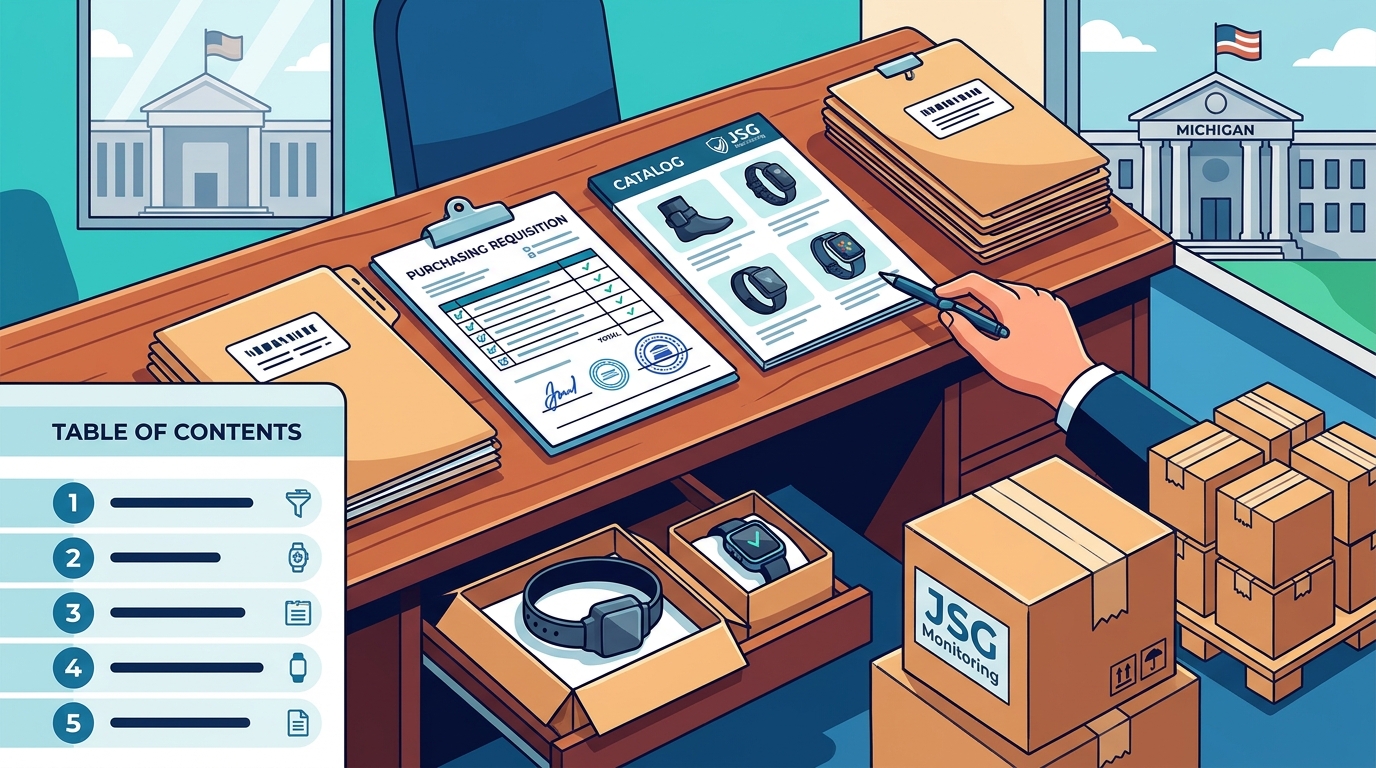
Michigan courts and probation offices can purchase electronic monitoring equipment through state procurement channels, direct vendor partnerships, or specialized suppliers like JSG Monitoring. This guide covers the primary procurement pathways, the specific hardware options available for community supervision, and the operational considerations required to implement these systems effectively within the state's judicial framework.
Procurement Contracts and State Channels
Procurement in the Michigan judicial system is a structured process that balances cost efficiency with operational reliability. Courts and probation offices typically acquire electronic monitoring (EM) equipment through three primary channels: state-level cooperative purchasing contracts, direct vendor agreements, and local government procurement processes. Understanding these channels is the first step in securing the right technology for your agency.
State Cooperative Purchasing
Many Michigan local governments participate in state cooperative purchasing programs. These programs allow local agencies to buy goods and services at negotiated prices established by the state. For electronic monitoring, this often means accessing pre-vetted vendors who have already undergone the rigorous bidding process. This route reduces the administrative burden on individual courts while ensuring compliance with state purchasing laws.
Direct Vendor Agreements
Some larger jurisdictions or specialized probation departments choose to enter direct agreements with specific technology providers. This approach offers greater flexibility in selecting hardware features and software integrations. However, it requires a more detailed Request for Proposal (RFP) process. Agencies must clearly define their technical requirements, such as GPS accuracy, battery life, and software compatibility, to ensure the vendor can meet their specific operational needs.
Local Government Procurement
For smaller counties or municipal courts, local procurement rules may apply. These rules often have lower thresholds for direct purchase or simplified bidding processes. It is essential to consult with your local procurement officer to determine the correct legal pathway. Whether using a state contract or a local bid, the goal is to secure equipment that meets the standards of the Michigan Department of Technology, Management and Budget (DTMB) and local judicial requirements.
Hardware Options for Michigan Supervision
The choice of hardware depends on the specific supervision goals of the court. Michigan agencies utilize a range of devices, from GPS ankle monitors to alcohol monitoring systems. Each device serves a distinct purpose in managing offender compliance and public safety.
GPS and Location Monitoring Devices
GPS monitoring is the most common form of electronic supervision in Michigan. These devices track the location of the wearer in real-time. Modern devices, such as the BI LOC8 XT, utilize a combination of GPS, Wi-Fi, and cellular technology to ensure accurate tracking even in areas with poor satellite coverage. This multi-technology approach is critical for urban environments where GPS signals can be blocked by buildings.
Alcohol Monitoring Systems
For offenders with alcohol-related offenses, courts may order alcohol monitoring. This category includes two main types of devices. The first is the continuous transdermal alcohol monitor, such as the SCRAM Continuous bracelet, which detects alcohol absorption through the skin 24/7. The second is the remote breath alcohol monitor, such as the SCRAM Remote Breath, which requires the wearer to blow into a handheld device at scheduled or random intervals. Both options provide data that helps courts assess compliance with sobriety conditions.
Wrist-Worn and Discreet Devices
Discretion is a significant factor in modern monitoring. Wrist-worn devices, like the BI VeriWatch, offer the same tracking capabilities as ankle bracelets but are less visible. This can reduce the stigma associated with wearing a monitor, potentially improving compliance and reintegration into the community. These devices are comparable in size to consumer smartwatches, making them a viable option for lower-risk offenders or those in pretrial release.
| Device Type | Primary Function | Key Technology | Best For |
|---|---|---|---|
| GPS Ankle Monitor | Location tracking and zone enforcement | GPS, Cellular, Wi-Fi | High-risk offenders, curfew enforcement |
| Transdermal Alcohol Monitor | Continuous alcohol detection | Transdermal sensors | Repeat DUI offenders, addiction treatment |
| Remote Breath Monitor | Scheduled alcohol testing | Fuel cell, Facial Recognition | Lower-risk offenders, flexible schedules |
| Wrist-Worn Monitor | Discreet location tracking | GPS, Biometric verification | Pretrial release, stigma reduction |
Implementation and Operational Requirements
Purchasing the equipment is only the first step. Successful implementation requires a robust operational framework. This includes software integration, staff training, and clear protocols for alert management. The technology must be supported by human judgment to be effective.
Software Integration and Data Management
Hardware is useless without a platform to manage the data it generates. Michigan agencies need software that can integrate with existing case management systems. This software should provide real-time alerts, mapping capabilities, and reporting tools. For example, the Omnilink GPS integrates with FocalPoint software, allowing officers to visualize offender movements and respond to violations efficiently. The software must be secure, compliant with data privacy laws, and accessible to authorized personnel 24/7.
Staff Training and Protocols
Monitoring officers and probation staff must be trained on how to interpret data and respond to alerts. An alert is not always a violation. It could be a technical error, a battery issue, or a false positive. Clear protocols are needed to distinguish between these scenarios. Training should cover device installation, troubleshooting, and the ethical considerations of monitoring. As noted in recent industry analysis, the most critical part of monitoring happens before the device is installed, when expectations and parameters are clearly defined. according to Use of Location
Alert Management and Response
Electronic monitoring generates a high volume of data. Not every data point requires immediate action. Agencies must establish a tiered response system. Low-priority alerts, such as a minor zone breach, might be reviewed during business hours. High-priority alerts, such as a tamper event or a positive alcohol test, require immediate notification to law enforcement or the supervising officer. This system ensures that resources are allocated effectively and that public safety is maintained.
Vendor Partnerships and Support
Choosing a vendor is as important as choosing the hardware. A reliable vendor provides ongoing support, training, and technical assistance. JSG Monitoring, for instance, partners with trusted suppliers to offer a comprehensive range of products and services. This partnership model ensures that agencies have access to the latest technology and expert guidance.
Technical Support and Maintenance
Electronic monitoring devices require regular maintenance. Batteries need to be charged, straps need to be replaced, and software needs to be updated. A good vendor provides 24/7 technical support to address these issues promptly. Downtime in a monitoring system can compromise public safety. Therefore, agencies should look for vendors with a proven track record of reliability and responsive customer service.
Training and Onboarding
Vendor support extends beyond technical issues. It includes training for new staff and ongoing education for existing teams. JSG Monitoring offers a robust training library and expert-led business strategies to help partners succeed. This support is crucial for ensuring that the technology is used correctly and effectively. A vendor that invests in your team's success is a partner, not just a supplier.
Scalability and Future-Proofing
As your agency's needs evolve, your monitoring system should be able to scale. This might mean adding new device types, expanding the number of monitored individuals, or integrating new software features. A scalable solution allows you to adapt to changes in legislation, public safety priorities, and technological advancements. When evaluating vendors, ask about their roadmap for future products and services.
Key Takeaways
- Michigan courts can purchase EM equipment through state cooperative contracts, direct vendor agreements, or local procurement.
- GPS ankle monitors are the most common device, but alcohol monitors and wrist-worn devices serve specific supervision needs.
- Multi-technology devices (GPS, Wi-Fi, Cellular) provide more reliable tracking in urban environments.
- Software integration is critical for managing data and responding to alerts efficiently.
- Staff training and clear alert protocols are essential for effective monitoring operations.
- Vendor support, including 24/7 technical assistance and training, is a key factor in long-term success.
- Discreet devices like wrist-worn monitors can reduce stigma and improve compliance.
- Scalability ensures that your monitoring system can adapt to future needs and technological changes.
Frequently Asked Questions
What is the most common type of electronic monitoring in Michigan?
GPS ankle monitoring is the most common type of electronic monitoring in Michigan. It is used for a wide range of offenses, from probation supervision to pretrial release. The device tracks the wearer's location and can enforce curfews and exclusion zones.
Can courts order alcohol monitoring for DUI offenders?
Yes, Michigan courts can order alcohol monitoring for DUI offenders. This can be done using continuous transdermal monitors or remote breath monitors. These devices provide data on alcohol consumption, helping courts assess compliance with sobriety conditions.
How do I choose the right vendor for my agency?
Choose a vendor based on their product range, technical support, training resources, and reputation. Look for a vendor that offers a comprehensive suite of devices and software, along with 24/7 support and expert guidance. JSG Monitoring is a trusted provider that partners with agencies to deliver tailored solutions.
What is the difference between a GPS monitor and an alcohol monitor?
A GPS monitor tracks the wearer's location, while an alcohol monitor detects alcohol consumption. GPS monitors are used for location-based supervision, such as curfews and exclusion zones. Alcohol monitors are used for substance-based supervision, such as sobriety conditions for DUI offenders.
Are wrist-worn monitors as effective as ankle monitors?
Yes, wrist-worn monitors are as effective as ankle monitors for location tracking. They use the same GPS and cellular technology but are less visible. This can reduce stigma and improve compliance, making them a good option for lower-risk offenders or pretrial release.
How much does electronic monitoring cost?
The cost of electronic monitoring varies depending on the device type, vendor, and duration of monitoring. GPS monitors typically cost more than alcohol monitors. Agencies can often access discounted rates through state cooperative purchasing contracts. It is important to consider the total cost of ownership, including software, maintenance, and support. according to Electronic monitoring in
What happens if a monitoring device is tampered with?
If a monitoring device is tampered with, the system generates an alert. The supervising officer or monitoring center is notified immediately. The alert is reviewed to determine if it is a false positive or a genuine violation. If it is a violation, the offender may be arrested or their supervision conditions may be modified.
Conclusion
Procuring electronic monitoring equipment in Michigan requires a strategic approach that considers procurement channels, hardware options, and operational requirements. By understanding the available pathways and selecting the right technology and vendor, courts and probation offices can enhance public safety and support offender rehabilitation. JSG Monitoring is committed to providing the tools and support needed to implement effective monitoring programs. To explore our full range of products and partnership opportunities, today.