

GPS ankle monitors that use Wi-Fi and cellular alongside GPS provide the most accurate location data available in 2026. This multi-modal approach ensures continuous tracking even when satellite signals are weak or blocked. JSG Monitoring supplies these advanced devices to courts and agencies across the United States. This guide explains how hybrid tracking works, why it matters for compliance, and which devices lead the market.
Hybrid Tracking Technology
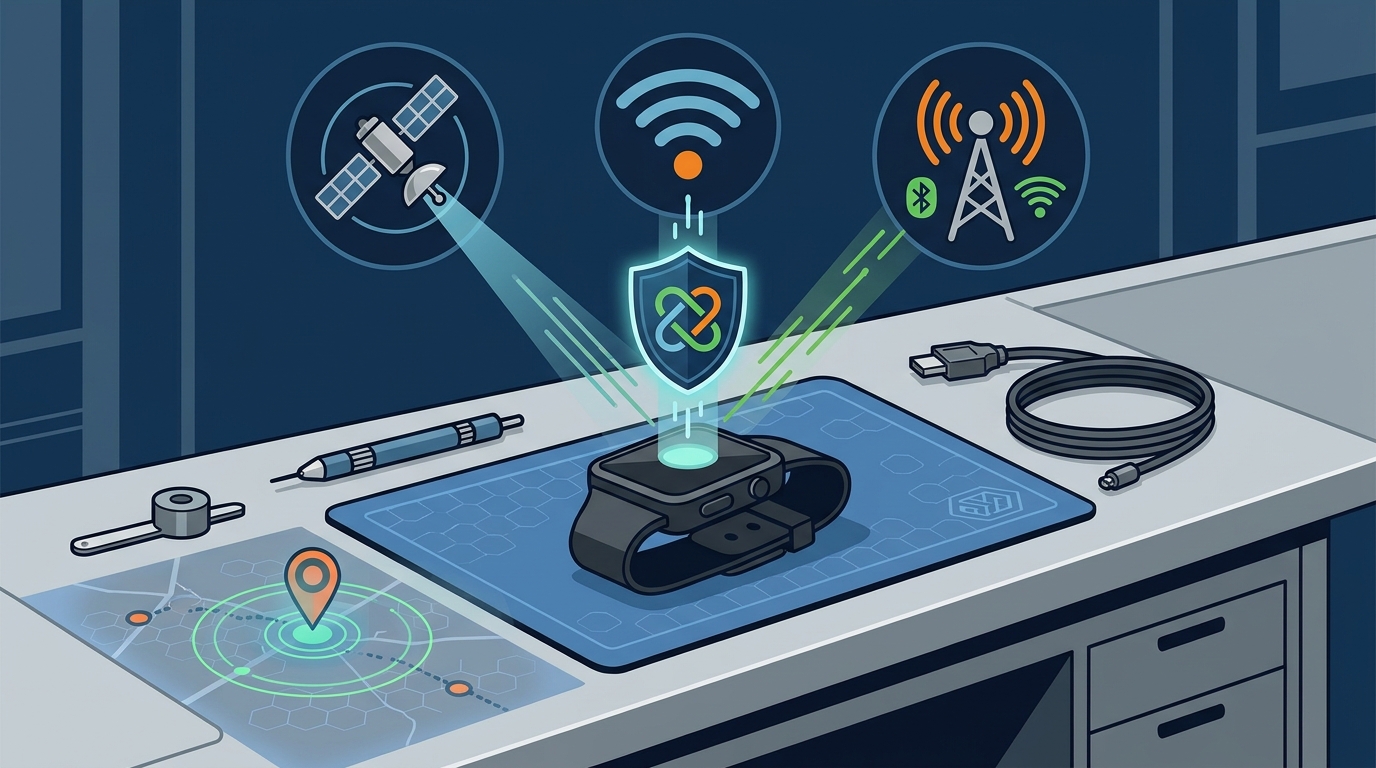
Modern electronic monitoring relies on a combination of technologies to ensure no gaps in supervision. A single technology often fails in specific environments. GPS signals can be blocked by buildings or terrain. Cellular networks may drop in rural areas. Wi-Fi signals provide precise indoor location data. By combining these three methods, devices create a robust safety net for location tracking. according to Electronic Monitoring Technology
How GPS, Wi-Fi, and Cellular Work Together
The Role of LTE and 5G
Connectivity is the backbone of real-time monitoring. Older devices used 2G or 3G networks, which are being phased out. Modern devices use LTE or 5G for faster data transmission. This allows for quicker alert generation and more frequent location updates. The National Institute of Justice has noted that the introduction of LTE-M and NB-IoT has improved reporting frequencies in electronic monitoring systems. Faster connectivity means that agencies can respond to violations more quickly. It also reduces the risk of data loss during network transitions.
Indoor vs. Outdoor Tracking
Indoor tracking is a critical component of house arrest and curfew monitoring. GPS cannot penetrate walls effectively. Wi-Fi and cellular signals can. Devices that support indoor tracking use Wi-Fi fingerprinting to determine if a participant is inside a designated zone. This is essential for verifying compliance with home confinement orders. Without indoor tracking capabilities, a participant could technically be outside the home but still within the GPS radius. Hybrid systems close this loophole by requiring Wi-Fi or cellular confirmation for indoor presence.
Dallas Monitoring Providers
While JSG Monitoring operates primarily in Michigan, the principles of effective electronic monitoring apply nationwide. Agencies in Dallas and other major cities face similar challenges with caseloads and technology integration. Understanding the landscape of monitoring providers helps agencies make informed decisions about their technology stack.
Challenges in Urban Monitoring
Urban environments present unique challenges for electronic monitoring. Dense building structures can block GPS signals. High population density can cause cellular network congestion. Providers in cities like Dallas must ensure their devices can handle these conditions. Multi-modal tracking is essential in urban settings. It ensures that location data remains accurate even in complex environments. Agencies should look for devices that have been tested in urban scenarios.
Choosing a Provider
When selecting a monitoring provider, agencies should consider several factors. Local support is crucial. A provider with a nearby office can respond quickly to equipment issues. JSG Monitoring offers local support in Michigan, but agencies in other regions should seek providers with similar capabilities. Training is another important factor. Staff need to be trained on how to interpret data from hybrid tracking systems. A good provider offers comprehensive training and ongoing support. Finally, integration with existing software is vital. The monitoring platform should communicate seamlessly with the agency's case management system.
Regional Considerations
Different regions have different regulatory requirements. Some states have specific standards for electronic monitoring devices. Agencies should ensure that their chosen provider complies with local laws. For example, some jurisdictions require specific data retention periods. Others have strict privacy regulations. A provider that understands these regional nuances can help agencies avoid legal issues. JSG Monitoring works with courts and law enforcement to tailor solutions to their specific needs. This approach ensures that the technology aligns with the agency's goals and legal obligations.
Device Comparison
Not all GPS ankle monitors are created equal. Some devices rely solely on GPS, while others use a combination of technologies. The table below compares key features of devices available through JSG Monitoring. This comparison helps agencies understand the differences between available options.
| Device | Tracking Technologies | Key Features | Best For |
|---|---|---|---|
| BI LOC8 XT | GPS, Wi-Fi, Cellular | Low-profile design, tamper detection, Google Maps integration | General offender monitoring |
| Omnilink GPS | GPS, Cellular, RF, Wi-Fi | Two-way communication, indoor tracking, FocalPoint integration | House arrest and curfew monitoring |
| SCRAM GPS | GPS, 3G | Tamper-proof strap, GPS Analytics, Google Street View | High-risk offender tracking |
| Buddi Insight | GPS, Cellular | Waterproof, tamper-proof, on-body charging | Cost-effective monitoring |
The BI LOC8 XT is a standout option for agencies seeking a discreet and reliable device. It uses GPS, Wi-Fi, and cellular technology to ensure complete community coverage. Its low-profile design makes it less noticeable to the wearer, which can improve compliance. The Omnilink GPS offers additional features for indoor tracking. It uses RF and Wi-Fi beacons to verify presence in specific locations. This makes it ideal for house arrest programs. The SCRAM GPS is designed for high-risk offenders. It features a tamper-proof strap and advanced analytics tools. The Buddi Insight is a cost-effective option that still provides robust tracking capabilities.
Key Takeaways
- Hybrid tracking using GPS, Wi-Fi, and cellular provides the most accurate location data.
- Wi-Fi is essential for indoor tracking and verifying home confinement compliance.
- Cellular technology acts as a backup when GPS signals are weak or blocked.
- Modern devices use LTE or 5G for faster data transmission and real-time alerts.
- Agencies should choose providers with local support and comprehensive training.
- The BI LOC8 XT and Omnilink GPS are top choices for multi-modal tracking.
- Indoor tracking capabilities are crucial for closing loopholes in house arrest programs.
- Regional regulations and privacy laws should influence device selection.
Frequently Asked Questions
What is the difference between GPS and Wi-Fi tracking?
GPS uses satellites to determine outdoor location, while Wi-Fi uses nearby access points to determine indoor location. GPS is less accurate indoors, whereas Wi-Fi provides precise indoor positioning.
Why is cellular technology important in ankle monitors?
Cellular technology provides a backup for location tracking when GPS is unavailable. It also enables real-time data transmission and two-way communication with the participant.
Can ankle monitors track location indoors?
Yes, if they use Wi-Fi or RF technology. GPS alone cannot track location indoors effectively. Devices like the Omnilink GPS use Wi-Fi beacons to verify indoor presence.
What is the role of LTE in electronic monitoring?
LTE provides faster and more reliable data transmission than older 2G or 3G networks. It allows for quicker alert generation and more frequent location updates.
How do I choose the right ankle monitor for my agency?
Consider your specific needs, such as indoor tracking, tamper detection, and integration with existing software. Look for providers with local support and comprehensive training.
Are hybrid tracking devices more expensive?
They may have a higher upfront cost, but they can reduce operational costs by minimizing false alerts and improving compliance. The long-term benefits often outweigh the initial investment.
Conclusion
Choosing the right GPS ankle monitor is a critical decision for any agency involved in community supervision. Hybrid tracking technologies that combine GPS, Wi-Fi, and cellular provide the most reliable and accurate location data. These systems ensure that participants are monitored continuously, both indoors and outdoors. JSG Monitoring offers a range of devices that meet these standards, including the BI LOC8 XT and Omnilink GPS. By partnering with JSG Monitoring, agencies can access advanced technology, expert support, and tailored solutions that enhance public safety and accountability. To learn more about how JSG Monitoring can support your program, .