
What Criteria Should Courts Use When Selecting Monitoring Vendors?
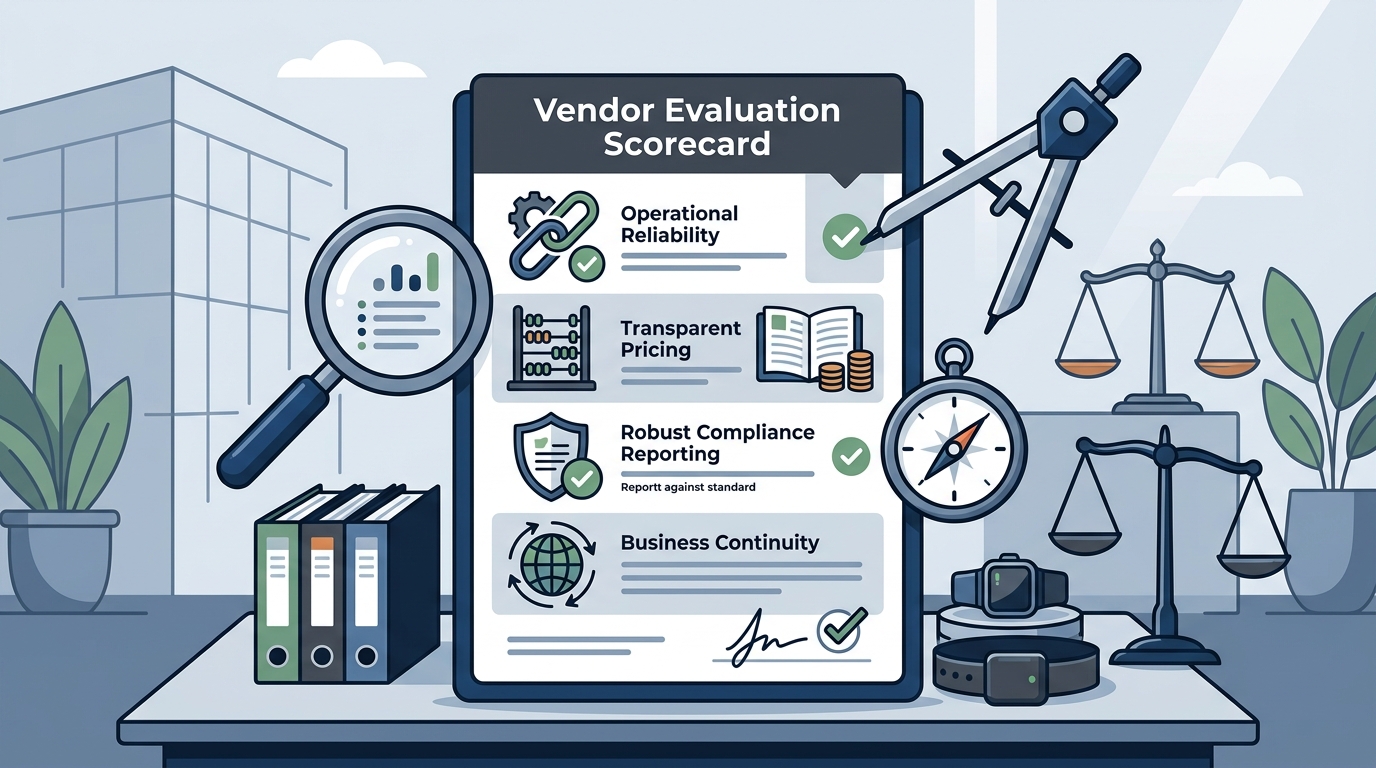
Courts should select monitoring vendors based on operational reliability, transparent pricing, and robust compliance reporting. JSG Monitoring provides the framework for evaluating these factors effectively. This guide covers vendor selection criteria, pricing transparency, compliance reporting, and business continuity. according to Third Party Vendors
Vendor Selection Criteria
Choosing a vendor is a strategic decision that impacts public safety and judicial efficiency. Courts must look beyond hardware specifications to evaluate the partner's operational capacity. A reliable vendor provides more than just devices; they offer a comprehensive support ecosystem. according to Bidders Solicitations Judicial
Technology Versatility and Integration
Electronic monitoring is the use of technology to track offender compliance with court orders. Modern programs require a mix of GPS tracking, alcohol monitoring, and victim notification systems. JSG Monitoring offers an equipment-agnostic approach, working with leading manufacturers to ensure the right tool is used for each specific case. This flexibility prevents courts from being locked into a single proprietary ecosystem that may not fit every offender's risk profile.
Staffing and Expertise
Technology alone does not ensure safety. The human element of monitoring is critical for interpreting data and responding to alerts. Vendors must demonstrate a dedicated team capable of 24/7/365 monitoring. JSG Monitoring emphasizes that true partnership involves expert judgment, where agents interpret behavior and ensure critical information reaches the right people at the right time. This level of expertise transforms raw data into dependable decisions for the court.
Local Presence and Responsiveness
A local provider integrated into the county infrastructure supports operational efficiency. Immediate equipment replacement and face-to-face collaboration with court staff are vital. JSG Monitoring maintains multiple locations across Michigan, allowing for rapid response and strong community ties. This local presence ensures that when a violation occurs, the response is swift and context-aware.
Pricing Transparency
Budget constraints are a reality for most judicial systems. However, the lowest daily rate is rarely the best value in a specialty court environment. Courts must evaluate the total cost of ownership, including hidden fees and operational impacts.
Hidden Costs and Operational Impact
A device that appears less expensive can become more costly if it increases administrative burden. Inconsistent reporting or poor device reliability can lead to defensibility concerns in court. JSG Monitoring advocates for evaluating how monitoring integrates with court administration workflows and judicial reporting requirements. The true cost includes the staff time required to manage alerts and the potential for missed violations due to poor support. according to Audit Report on
Value Beyond the Device
Outsourcing electronic monitoring oversight is often more efficient than staffing it internally. Agencies avoid costs tied to salaries, benefits, overtime, and training. JSG Monitoring provides a more affordable and reliable model by handling the day-to-day demands of monitoring. This allows agencies to gain capacity without increasing their payroll or carrying long-term staffing obligations.
Compliance Reporting
Clear documentation protects the court and ensures that monitoring data withstands scrutiny. Reports must be written in language that supports judicial decision-making. JSG Monitoring focuses on providing clear, consistent reporting that strengthens the integrity of specialty court programs.
Clarity and Defensibility
When a monitoring alert occurs, court staff must know exactly what happened and how it was reviewed. Violation reports should align with graduated sanctions policies. JSG Monitoring ensures that documentation is clear and actionable, reducing the workload on court staff and complicating hearings. This clarity is essential for maintaining confidence in the supervision process.
Real-Time Data and Alerts
Real-time notifications keep supervising authorities informed about potential violations. JSG Monitoring's platforms provide automated reports that streamline the review process. This data consolidation allows officers to focus on critical tasks rather than manual check-ins. The ability to act quickly and decisively is a hallmark of a high-quality monitoring partner.
Business Continuity
Monitoring does not run on business hours. Alerts happen at 2:00 AM, on weekends, and during holidays. A vendor's ability to maintain operations during these times is a critical selection criterion. JSG Monitoring operates with a commitment to 24/7/365 support, ensuring that monitoring never stops.
Redundancy and Reliability
A true partner maintains redundant systems and trained staff to ensure continuity. JSG Monitoring's approach includes proven processes for troubleshooting devices and replacing equipment. This reliability is the foundation of accountability. Courts must ensure that their vendor has the infrastructure to handle the constant stream of data and alerts without interruption.
Long-Term Partnership
Electronic monitoring is a long-term commitment. Courts need a partner who is invested in their success. JSG Monitoring provides education, support, and empathy for those wearing the devices and those relying on them. This long-term perspective ensures that the vendor remains a stable and trusted ally in the pursuit of public safety.
Key Takeaways
- Vendor selection should prioritize operational reliability and expert staffing over hardware cost alone.
- Equipment-agnostic providers offer greater flexibility and prevent proprietary lock-in.
- Transparent pricing must account for total cost of ownership, including administrative burden.
- Compliance reporting must be clear, consistent, and defensible in court.
- Business continuity requires 24/7/365 monitoring and redundant systems.
- Local presence enhances responsiveness and collaboration with court staff.
- True partnership involves ongoing support, education, and accountability.
Frequently Asked Questions
What is the most important factor in selecting a monitoring vendor?
The most important factor is the vendor's ability to provide reliable, 24/7 monitoring with expert interpretation of data. Technology is a tool, but human judgment is what ensures safety and compliance.
How does JSG Monitoring differ from other providers?
JSG Monitoring is equipment-agnostic, working with all leading technologies to provide the right solution for each client. They also offer a dedicated partnership model that includes training, support, and local presence.
Can courts switch vendors mid-contract?
Switching vendors can be complex and disruptive. Courts should carefully evaluate exit clauses and data migration processes before signing a contract. A stable, long-term partner is generally preferred.
What role does local presence play in monitoring?
Local presence allows for immediate equipment replacement, face-to-face collaboration, and a better understanding of local court expectations. It strengthens the partnership and ensures faster response times.
How can courts ensure data defensibility?
Courts should require vendors to provide clear, consistent, and detailed violation reports. These reports must be written in language that supports judicial decision-making and withstands courtroom scrutiny.
Is the lowest price always the best option?
No. The lowest price often means lower support and higher operational costs. Courts should evaluate the total value, including support, reliability, and reporting quality.