

Wrist-worn devices like the BI VeriWatch provide real-time monitoring comparable to ankle-worn tech by using GPS, Wi-Fi, and biometric facial comparison. This guide explains how to choose, verify, and implement these discreet tools for community supervision.
How to Choose: What Separates a Good Option from a Bad One
Electronic monitoring is a technology-driven system used to track offender compliance in real time. When selecting a wrist-worn device, the primary differentiator is the integration of biometric verification with location data. A high-quality device does not just track where a person is; it confirms who is wearing it. The BI VeriWatch, for example, uses biometric facial comparison and liveness detection to ensure the device is on the authorized individual. This prevents the common issue of device sharing, which is a significant risk with standard ankle monitors. Additionally, look for devices that offer high-frequency pursuit mode. This feature allows the system to increase tracking frequency when a violation is suspected, providing a robust safety net for agencies.
What to Ask: The Specific Questions to Ask Before Committing
Before committing to a new monitoring technology, agencies must ask specific questions about data integrity and user experience. First, ask how the device handles GPS interference. In dense urban areas or indoors, GPS signals can be weak. Does the device use Wi-Fi or cellular triangulation to maintain accuracy? The BI VeriWatch utilizes GPS and Wi-Fi to increase location accuracy and preserve battery life. Second, ask about the charging process. A device that requires frequent, cumbersome charging will lead to non-compliance. Look for cordless charging systems that offer a full charge in a short time, such as the two-hour charge time of the BI VeriWatch. Finally, ask about the software interface. Can officers view real-time data and receive alerts on a mobile device or desktop portal?
How to Verify: How to Check That a Claim or Credential Is Real
Verifying the capabilities of a monitoring device requires looking beyond marketing claims. Check for the presence of a secure, custom operating system. A device running on a generic consumer OS is vulnerable to tampering and data leakage. The BI VeriWatch runs on a secure, custom operating system designed for the rigors of community supervision. Additionally, verify the hardware specifications. A device comparable in size to a consumer smartwatch should still meet durability standards. Check the dimensions and weight; the BI VeriWatch is 2.25 inches high, 1.5 inches wide, and weighs 2.3 ounces. These specific metrics ensure the device is discreet yet robust enough for daily wear.
How It Works: What Happens, in What Order, and How Long It Takes
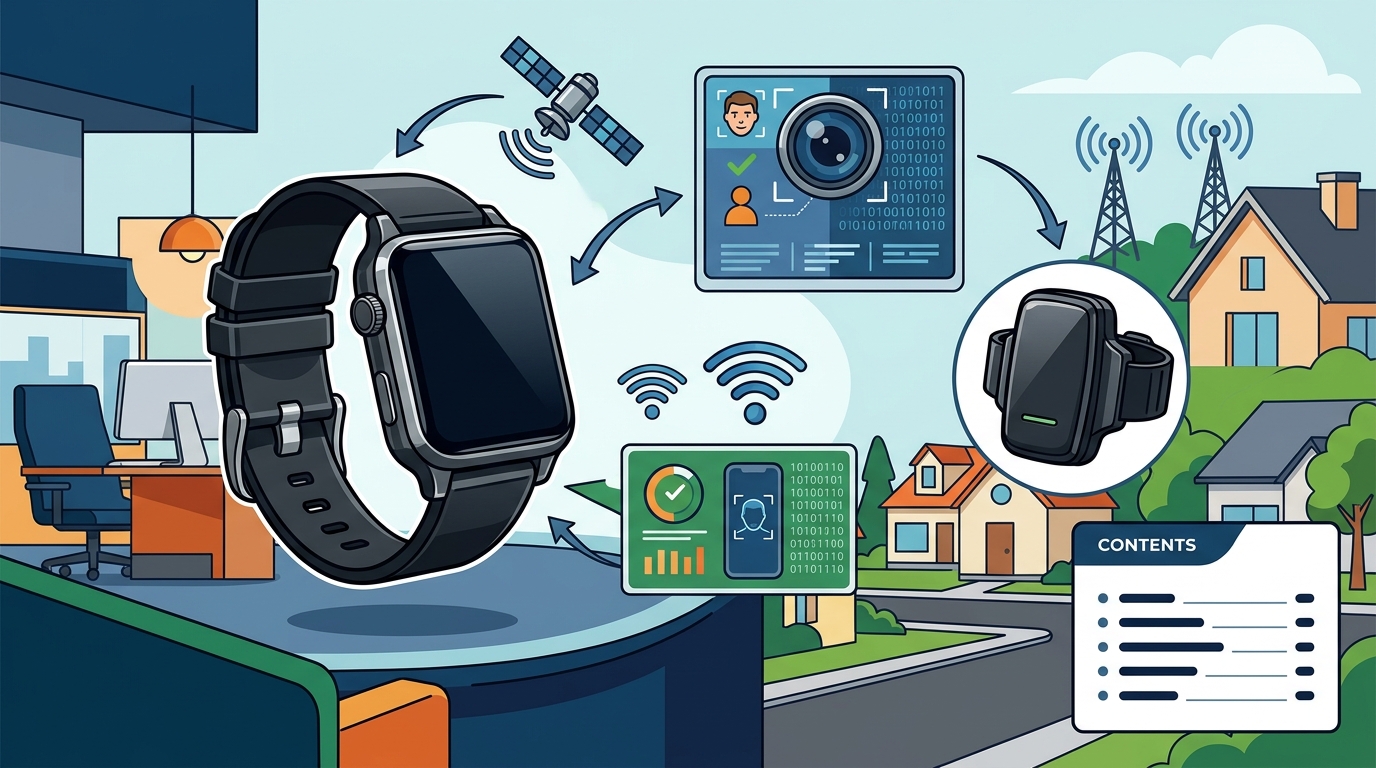
The operational workflow of a wrist-worn device begins with enrollment and device fitting. The device is secured to the wrist, and the user completes a biometric check-in. This process involves the device capturing a facial image to establish a baseline. Once enrolled, the device transmits location data via LTE cellular connectivity. The system operates in a continuous loop of data transmission and verification. If the device detects a potential removal via a proximity sensor, it prompts a biometric check-in. This immediate feedback loop ensures that any attempt to remove the device is flagged in real time. The entire process of data transmission and alert generation happens within seconds, allowing monitoring officers to respond quickly to potential violations.
What It Costs: What Drives the Price Up or Down
The cost of electronic monitoring is driven by hardware durability, software integration, and connectivity. Wrist-worn devices often command a premium over basic ankle monitors due to their advanced biometric features and secure operating systems. However, this cost is offset by reduced administrative burden. Because the device verifies identity automatically, agencies spend less time on manual photo reviews. The BI VeriWatch offers a full charge in two hours and up to 16 hours of battery life on a single charge. This efficiency reduces the need for frequent device swaps and maintenance visits. When evaluating cost, consider the total cost of ownership, including software licensing, data storage, and technical support. JSG Monitoring provides these solutions with a focus on reliable, high-quality products that streamline operations.
What Goes Wrong: The Common Mistakes and How to Avoid Them
Common mistakes in implementing wrist-worn monitoring include underestimating the importance of user training and ignoring battery management. If users do not understand how to charge the device or complete a biometric check-in, they may inadvertently trigger false alerts. To avoid this, provide clear, concise training materials. Another mistake is failing to configure the device for the specific environment. In areas with poor cellular coverage, the device may struggle to transmit data. Ensure that the device supports multiple connectivity options, such as LTE and Wi-Fi, to maintain reliable communication. The BI VeriWatch is designed with these challenges in mind, offering robust connectivity and a secure app to control device activity.
Versus Alternatives: How This Compares to the Alternatives
Wrist-worn devices offer a distinct advantage over traditional ankle-worn monitors in terms of discretion and user comfort. Ankle monitors are often bulky and can be difficult to hide, leading to social stigma and non-compliance. Wrist-worn devices, like the BI VeriWatch, are comparable in size to a consumer smartwatch, making them far less noticeable. This discretion can improve user engagement and reduce the likelihood of device removal. However, ankle monitors may still be preferred for certain high-risk cases where tamper-proofing is the primary concern. The following table compares the key features of wrist-worn and ankle-worn devices.
| Feature | Wrist-Worn (e.g., BI VeriWatch) | Ankle-Worn (e.g., BI LOC8 XT) |
|---|---|---|
| Discretion | High (Smartwatch size) | Low (Bulky bracelet) |
| Biometric Verification | Facial Comparison and Liveness Detection | Typically limited or absent |
| Connectivity | GPS, Wi-Fi, LTE | GPS, Wi-Fi, Cellular |
| Battery Life | Up to 16-24 hours | Varies by model |
| Charging | Cordless, 2-hour full charge | Varies by model |
For a Specific Situation: How the Answer Changes for a Particular Case
For cases involving domestic violence or restraining orders, the choice of device may depend on the need for immediate alerts and victim safety. Wrist-worn devices with real-time alerts can be particularly effective in these scenarios. The ability to track location in real time and verify identity ensures that the offender is complying with court-ordered conditions. For lower-risk offenders, a wrist-worn device may be a more appropriate and less intrusive option. It allows for community supervision without the significant social stigma associated with ankle monitors. JSG Monitoring offers a range of products, including the BI VeriWatch, to support diverse monitoring needs.
Rules and Protections: The Rules, Rights or Protections That Apply
Electronic monitoring is governed by strict rules regarding data privacy and security. Agencies must ensure that all data collected by the device is stored securely and accessed only by authorized personnel. The use of a secure, custom operating system, as seen in the BI VeriWatch, helps protect against data breaches. Additionally, offenders have the right to be informed about how their data is used and stored. Transparency in the monitoring process is essential for maintaining trust and ensuring compliance. Agencies should provide clear guidelines on the rules of engagement, including what constitutes a violation and how alerts are handled.
Local Specifics: What Is Specific to the Areas Served
Local specifics can impact the effectiveness of electronic monitoring. In rural areas, cellular coverage may be limited, affecting the device's ability to transmit data. In urban areas, GPS interference can be a challenge. The BI VeriWatch addresses these issues by using a combination of GPS, Wi-Fi, and LTE connectivity. This multi-modal approach ensures reliable tracking regardless of the environment. Additionally, local laws and regulations may dictate the type of monitoring technology that can be used. Agencies should consult with legal counsel to ensure that their monitoring practices comply with local and state laws. JSG Monitoring works with agencies across the USA to provide tailored solutions that meet local needs.
Timing: When to Act and How Timing Changes the Outcome
Timing is critical in electronic monitoring. The sooner a violation is detected, the sooner an agency can respond. Wrist-worn devices with real-time alerts allow for immediate action, reducing the risk of further harm. For example, if an offender breaches a geofence, the system can alert the monitoring officer within seconds. This rapid response capability is a key advantage of modern monitoring technology. Agencies should implement these devices as soon as possible to maximize their benefits. Delaying the adoption of advanced monitoring tools can result in missed opportunities to prevent violations and protect the community.
Results Over Time: Measurable Outcomes and What to Expect Long Term
Long-term use of wrist-worn monitoring devices can lead to measurable improvements in compliance and public safety. By providing real-time data and automatic identity verification, these devices reduce the administrative burden on monitoring officers. This allows officers to focus on higher-priority cases and provide more personalized support to offenders. Over time, agencies can track trends in compliance and adjust their monitoring strategies accordingly. The BI VeriWatch, with its robust features and reliable performance, is designed to deliver consistent results over the long term. JSG Monitoring is committed to helping agencies achieve their goals through innovative and effective monitoring solutions.
Key Takeaways
- Wrist-worn devices like the BI VeriWatch offer real-time monitoring comparable to ankle-worn tech.
- Secure, custom operating systems protect data integrity and prevent tampering.
- Multi-modal connectivity (GPS, Wi-Fi, LTE) ensures reliable tracking in various environments.
- Discretion and user comfort improve compliance and reduce social stigma.
- Real-time alerts allow for rapid response to potential violations.
- Long-term use can lead to measurable improvements in compliance and public safety.
Frequently Asked Questions
What is the difference between wrist-worn and ankle-worn monitoring?
Wrist-worn devices are more discreet and often include biometric verification, while ankle-worn devices are bulkier and may lack advanced identity checks.
How does the BI VeriWatch verify identity?
The BI VeriWatch uses biometric facial comparison and liveness detection to confirm the user's identity in real time.
What is the battery life of the BI VeriWatch?
The BI VeriWatch offers up to 16 hours of battery life on a single charge and up to 24 hours when paired with a portable transfer battery.
Can the BI VeriWatch be used indoors?
Yes, the BI VeriWatch uses Wi-Fi and GPS to provide accurate location tracking, even in indoor environments.
How does the device handle GPS interference?
The BI VeriWatch uses a combination of GPS, Wi-Fi, and LTE connectivity to maintain accurate tracking, even in areas with GPS interference.
What is the cost of the BI VeriWatch?
The cost of the BI VeriWatch depends on the specific package and software integration. Contact JSG Monitoring for a detailed quote.
Is the BI VeriWatch tamper-proof?
The BI VeriWatch includes a proximity sensor that aids in detecting device removal and prompts a biometric check-in, enhancing security.
How long does it take to set up the BI VeriWatch?
Setup involves enrolling the user and completing a biometric check-in, which can be done quickly and efficiently.